
Published: March 2020 | Last Updated:November 2025
© Copyright 2026, Reddog Consulting Group.

Nearly 90 percent of consumers say a brand’s distinct identity influences their buying decisions. Standing out in a crowded market is harder than ever, yet finding the right brand positioning can make all the difference. Whether you lead a startup or manage an established company, understanding brand positioning reveals how the world sees you and why customers keep coming back. This guide brings clarity to what brand positioning really means, why it matters, and how expert strategies help brands build unforgettable reputations.
| Point | Details |
|---|---|
| Effective Brand Positioning | Establishes a unique market presence, driving differentiation and long-term growth. |
| Core Positioning Strategies | Include functional, symbolic, and experiential approaches to create consumer connections. |
| Implementation Process | Requires thorough market research, audience understanding, and consistent messaging. |
| Common Pitfalls | Include vague messaging, inconsistent branding, and neglecting market changes; avoid these to strengthen positioning. |
Brand positioning represents the strategic process of establishing a distinctive and meaningful place for a brand within the competitive marketplace and consumers’ perceptions. According to intemarketing, brand positioning involves creating a unique mental space that differentiates a brand through three primary approaches: functional positioning, symbolic positioning, and experiential positioning.
The functional positioning approach focuses on solving specific consumer problems and delivering tangible benefits. For example, a cleaning product might position itself as the most effective solution for tough stains. Symbolic positioning, by contrast, targets consumers’ psychological needs by enhancing self-image and social identity. An automobile brand positioning itself as a symbol of luxury and status exemplifies this strategy. Experiential positioning centers on providing sensory and cognitive stimulation, creating memorable interactions that go beyond mere product features.
As bbanote highlights, effective brand positioning is critical for creating mental real estate in consumers’ minds.
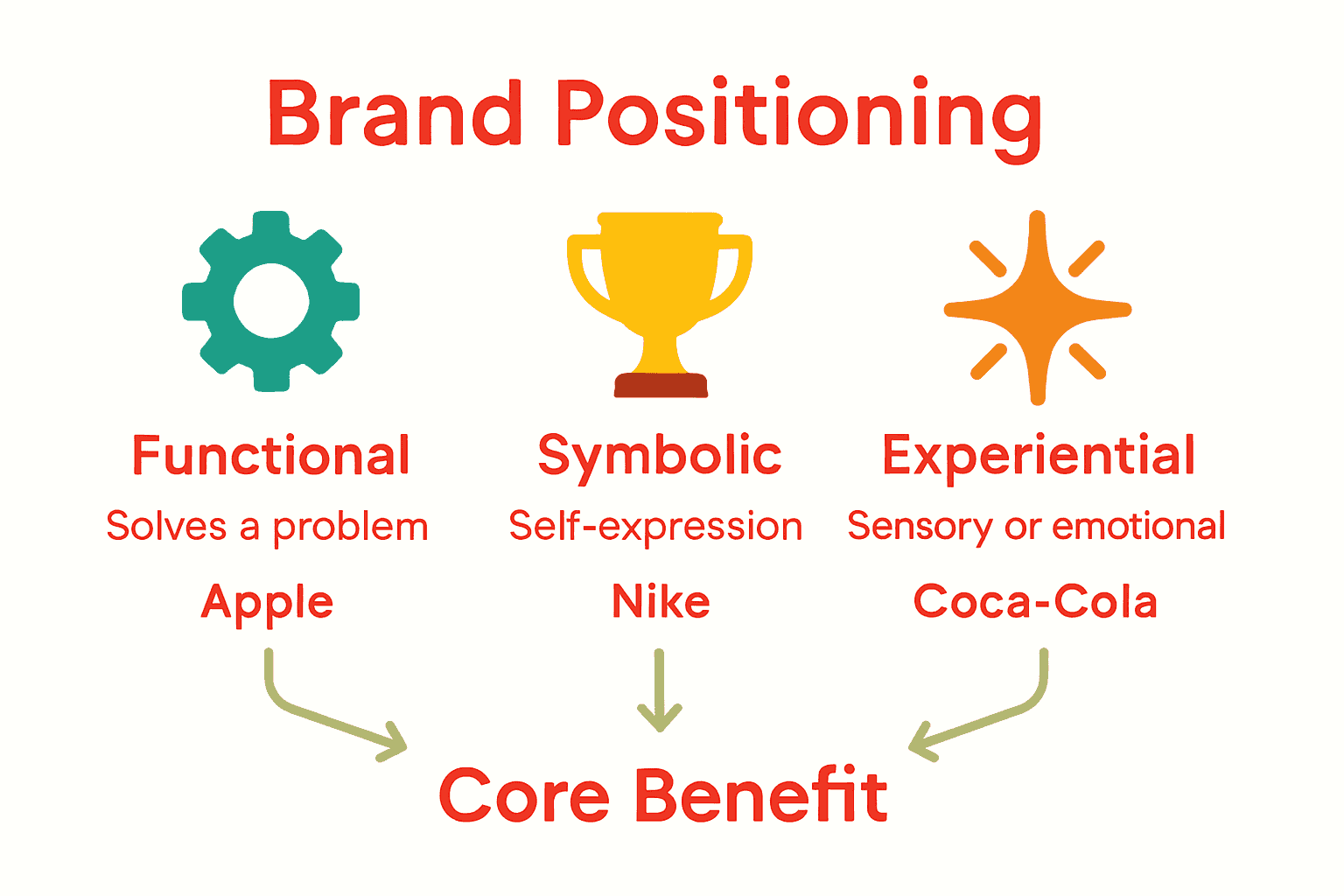 This strategic approach drives product differentiation, improves targeting efficiency, and facilitates potential brand extensions. Brands that successfully claim a specific psychological or functional territory can significantly increase market share and customer consideration. Understanding the Role of Branding in Growth provides additional insights into how strategic positioning contributes to long-term business growth.
Key elements of successful brand positioning include:
By meticulously crafting a positioning strategy that resonates with consumers’ needs and aspirations, brands can transform from generic offerings to memorable, compelling market presences that drive sustained business success.
Brand positioning strategies represent nuanced approaches businesses use to differentiate themselves in competitive markets. According to macfast, there are several core strategies brands can leverage to establish their unique market identity, including quality positioning, value positioning, benefit positioning, problem-solution positioning, and competitor-based positioning.
Quality positioning emphasizes a brand’s reliability, durability, and performance standards. Online research highlights examples like Chipotle’s commitment to ingredient quality, demonstrating how brands can position themselves through superior product attributes. Value positioning, by contrast, focuses on pricing strategies - whether targeting budget-conscious consumers with affordability or positioning as a premium, high-end offering. Benefit positioning drills down into specific product features that solve customer pain points, creating a compelling narrative around practical advantages.
Competitor-based positioning represents a sophisticated strategy where brands deliberately contrast themselves against market alternatives. This approach involves identifying gaps in competitors’ offerings and strategically highlighting your unique strengths. For instance, Tesla’s market positioning in electric vehicles centers on technological innovation and performance that distinguishes them from traditional automotive manufacturers. The Essential Guide to Brand Positioning Investment provides deeper insights into how strategic positioning can drive market differentiation.
Key brand positioning strategies include:
Successful brand positioning requires deep understanding of target audience needs, rigorous market research, and consistent communication of a brand’s distinctive value proposition. By carefully selecting and implementing the right positioning strategy, businesses can create memorable brand identities that resonate powerfully with their intended consumers.

Brand positioning requires a strategic and methodical approach to effectively establish a compelling market presence. According to GeeksforGeeks, the key elements of successful positioning include identifying the target audience, understanding deep customer needs, highlighting unique selling propositions, and emphasizing critical factors like price, quality, convenience, and emotional connection.
Market Segmentation forms the critical first step in positioning implementation. App research reveals that brands must carefully segment their market, targeting specific customer groups with precision. This process involves developing a clear positioning statement that articulates how the organization wants the market to perceive its product or service. Strategic segmentation allows brands to craft messages that resonate deeply with specific audience segments, creating more meaningful and impactful connections. What Is Business Positioning? Complete Guide for 2025 offers additional insights into sophisticated market targeting techniques.
The implementation process typically involves several strategic steps:
Successful brand positioning is not a one-time event but an ongoing strategic process. Brands must continuously monitor market dynamics, gather customer feedback, and be prepared to adapt their positioning strategy. By maintaining flexibility while staying true to core brand values, organizations can create positioning that remains relevant, compelling, and differentiated in an ever-changing marketplace.
Brand positioning plays a transformative role in driving omnichannel and marketplace success by creating a cohesive and compelling narrative across multiple consumer touchpoints. According to OnlineMkt, effective positioning ensures consistent messaging that enhances customer experience and builds brand loyalty, critical components for success in today’s fragmented digital marketplace.
Emotional and strategic positioning emerges as a powerful mechanism for marketplace differentiation. Loopo research highlights advanced positioning strategies that create deeper consumer connections through emotional, competitive, value-based, cultural, and technological approaches. These nuanced strategies enable brands to stand out across diverse channels, from social media platforms to physical retail environments. Omnichannel Marketing Integration for Retail Growth Success provides additional context on navigating complex multichannel environments.
Key impacts of strategic brand positioning on marketplace success include:
Successful omnichannel positioning requires continuous adaptation and a deep understanding of evolving consumer behaviors. Brands must remain agile, consistently monitoring market trends and consumer feedback to refine their positioning strategy. By creating a flexible yet consistent brand narrative that resonates across multiple platforms, businesses can transform their marketplace presence from generic to extraordinary.
Brand positioning requires precision and strategic thinking to effectively differentiate a company in a crowded marketplace. According to BBAnote, one of the most critical mistakes brands make is failing to create a clear mental image in customers’ minds, which can lead to marketplace confusion and diminished market share.
Inconsistent messaging represents another significant pitfall in brand positioning. GeeksforGeeks research underscores the necessity of maintaining consistent branding across all channels, highlighting that brands often neglect to understand their core customer needs and unique selling propositions. 7 Essential Branding Tips for Startups Seeking Rapid Growth provides additional insights into avoiding common positioning traps.
Key brand positioning mistakes to avoid include:
Successful brand positioning demands continuous refinement and a deep understanding of market dynamics. Brands must remain agile, regularly reassessing their positioning strategy to ensure it remains relevant, compelling, and aligned with evolving customer expectations. By proactively identifying and addressing potential positioning weaknesses, organizations can build stronger, more resonant brand identities that cut through marketplace noise.
Understanding and implementing effective brand positioning is essential to stand out and connect emotionally with your customers. This article clearly highlights common challenges such as inconsistent messaging, vague value propositions, and failure to adapt to changing markets. At Reddog Group, we specialize in turning these challenges into growth opportunities by crafting clear, compelling brand stories that resonate across all sales channels.
With extensive experience managing over 50 brands and thousands of SKUs, we offer proven solutions in omnichannel retailing, marketplace management, and digital marketing designed specifically for small and medium-sized businesses. We focus on strategic brand positioning that boosts customer recognition and loyalty while maximizing your performance on platforms like Amazon FBA and direct-to-consumer sales.
Ready to transform your brand and increase your market share with strategic positioning that truly connects?
Discover how our tailored services can help you create a unique and memorable brand presence. Visit Reddog Group today to start your journey toward measurable growth and long-term success. Explore our strategic guidance and marketing campaigns to gain the competitive edge your brand deserves.
Brand positioning is the strategic process of creating a unique and meaningful place for a brand in the marketplace and in consumers’ minds. It aims to differentiate a brand through various approaches such as functional, symbolic, and experiential positioning.
Effective brand positioning is crucial for establishing mental real estate in consumers’ minds, driving product differentiation, improving targeting efficiency, and facilitating potential brand extensions, ultimately leading to increased market share and customer loyalty.
Key elements include a clear value proposition, unique differentiation from competitors, alignment with target audience expectations, consistent messaging across channels, and both emotional and rational appeal.
Common mistakes include vague or ambiguous messaging, insufficient market research, lack of differentiation from competitors, inconsistent communication, neglecting target audience preferences, overcomplicating the brand narrative, and failing to adapt to market changes.
Leave a comment: