
Published: March 2020 | Last Updated:November 2025
© Copyright 2026, Reddog Consulting Group.

Forget thinking of Amazon as just a store. It's now a full-blown creator ecosystem where shoppers get buying advice directly on the product page. This guide lays out a proven playbook for how to find influencers on Amazon, moving your brand past guesswork to build profitable partnerships that drive measurable growth.
Amazon has officially evolved from a simple online retailer into a powerful discovery engine, and content creators are the ones behind the wheel. Shoppers aren't just searching for products; they're watching live streams, browsing curated storefronts, and trusting recommendations from creators they already follow.
For brands, this shift is a massive opportunity to connect with customers in a way that feels authentic and genuinely helpful. But this new reality demands a structured approach. Random outreach and crossing your fingers won't deliver the measurable results your business needs. Success comes from a clear, repeatable process that connects your brand with the right partners who can truly influence purchasing decisions.
We build our omnichannel strategies on a simple but incredibly effective process: Foundation → Optimization → Amplification. This framework ensures every action you take is purposeful and contributes directly to your bottom line.
This visual shows exactly how we approach building successful influencer partnerships on Amazon.
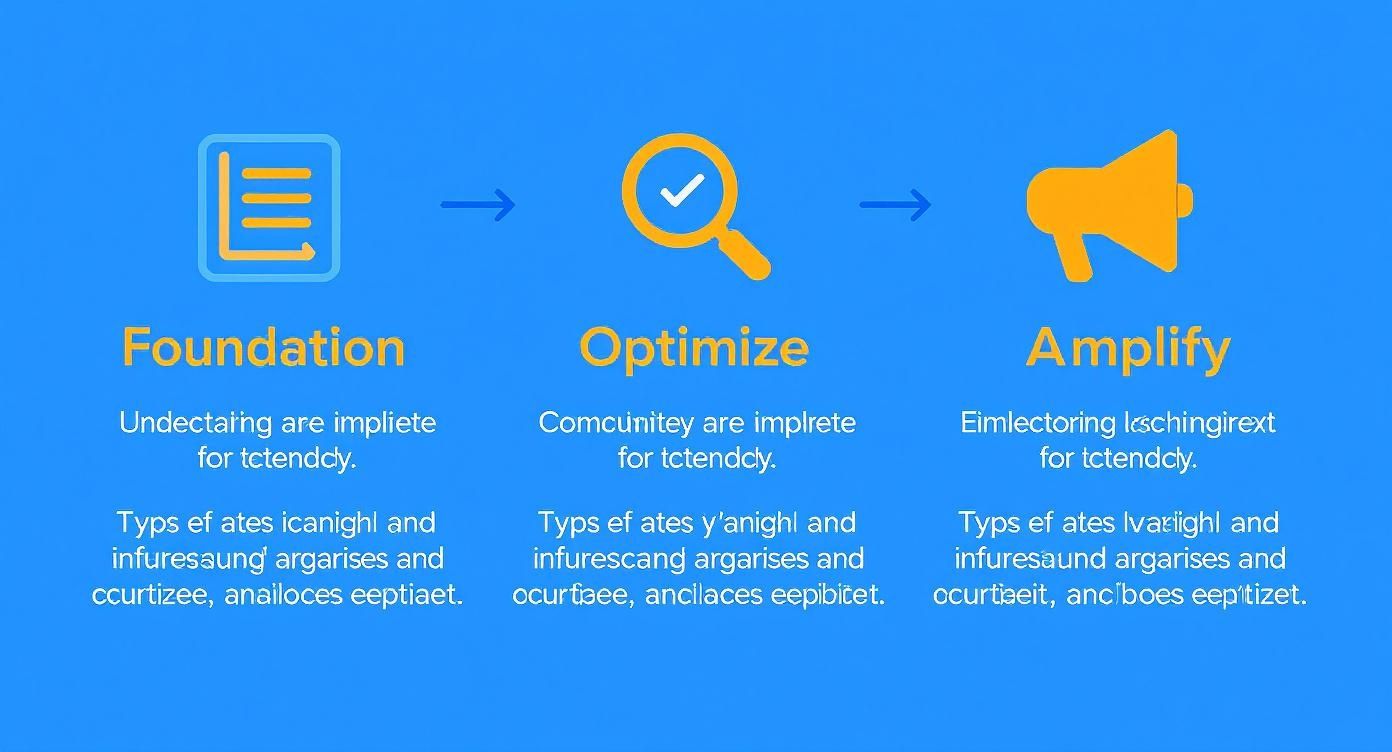
Each stage builds on the last, creating a scalable system for turning creator collaborations into a key driver of your online and offline growth.
This approach is more critical than ever. The influencer marketing industry is projected to hit $32.55 billion by 2025—a significant jump from $24 billion in 2024. Amazon is all in, with data showing that influencer-driven storefronts can double e-commerce conversion rates and boost average order value by 60%. The link between creator content and sales is undeniable.
The core of a winning Amazon influencer strategy isn't just finding someone with a huge following. It’s about finding the right partner whose audience aligns perfectly with your ideal customer, creating a seamless bridge between social proof and the point of purchase.
This guide is your roadmap to mastering that process. We’ll walk through each step, providing practical takeaways and real-world examples to help you identify, recruit, and manage creators who will become true advocates for your brand. For a deeper look at the strategies behind successful campaigns, check out this comprehensive guide to modern influencer marketing.
Let's start building your foundation.
Jumping into an influencer search without a clear target is like sailing without a map—you’ll be busy, but you won’t get anywhere meaningful. Before you even think about outreach, you need to lay the foundation. This means getting crystal clear on what success looks like for your brand and who, exactly, can help you get there.
Start with the most important question: What is our primary goal? Are you trying to drive brand awareness to a new audience? Are you focused on driving immediate, measurable sales for a specific product? Or is the goal to generate a steady stream of authentic user-generated content (UGC) to enhance your product listings and social feeds?
Each goal demands a different type of influencer and a distinct campaign structure. A large-scale brand awareness push might call for a creator with a broad audience. A sales-focused campaign, on the other hand, requires an influencer with a proven ability to convert their followers into buyers.
Once you know your objective, it’s time to build a detailed persona of your ideal influencer. This goes far beyond follower count. You're looking for a true partner whose brand DNA aligns with yours. Think of it as creating a profile for your perfect collaborator.
Consider these key attributes:
A well-defined influencer persona is your North Star. It keeps your search focused, saving you countless hours by immediately filtering out creators who don’t align with your brand, budget, or campaign objectives.
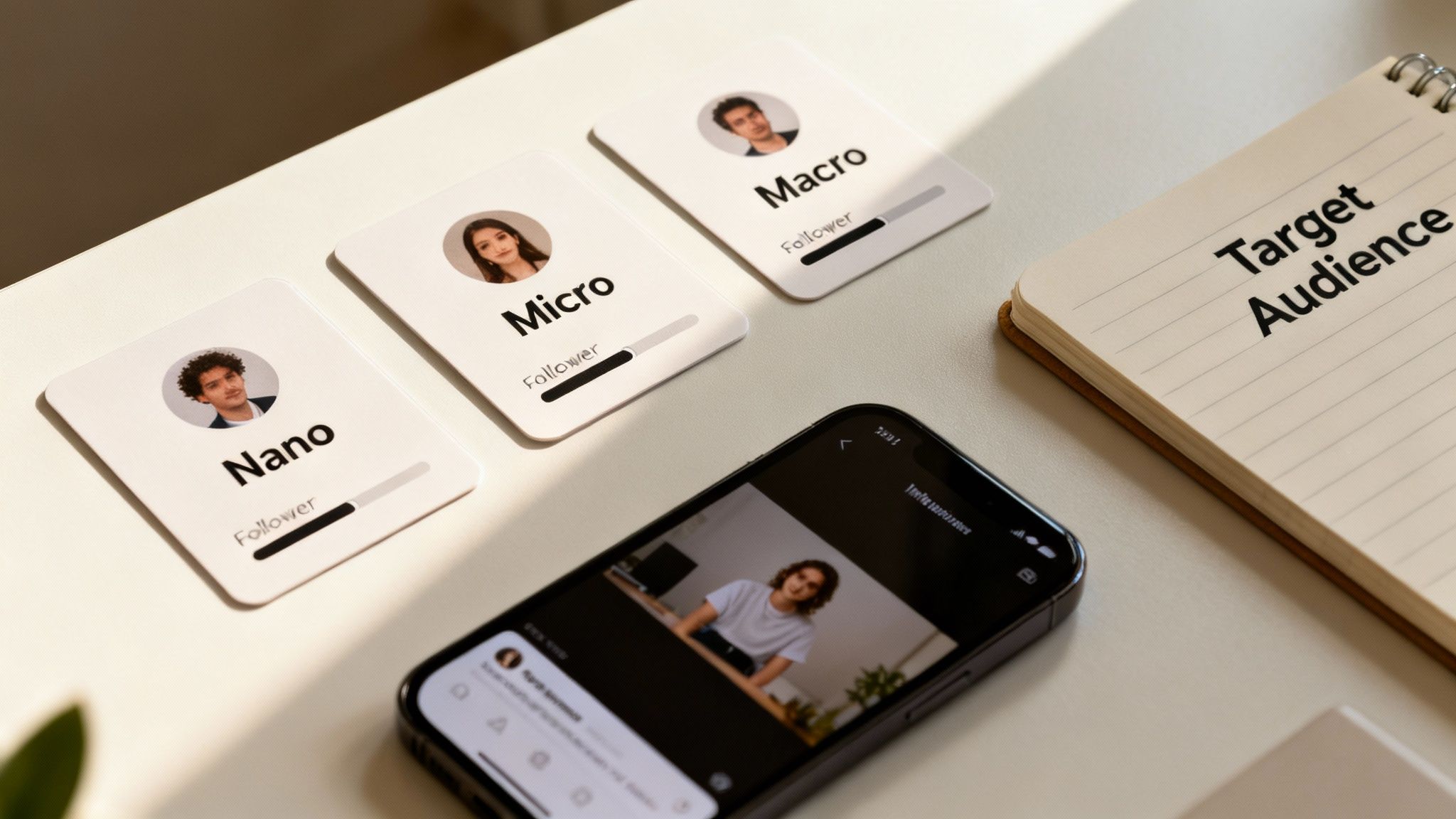
Not all influencers are created equal, and in this game, bigger isn’t always better. The right choice depends entirely on your specific goals and budget. Understanding the different influencer tiers is crucial for building a smart, effective strategy.
Let's break down the main categories:
| Influencer Tier | Follower Count | Best For | Key Advantage |
|---|---|---|---|
| Nano | 1k - 10k | Hyper-targeted niche marketing, building initial trust, and driving high-quality engagement. | Extremely high engagement rates and a strong, personal connection with their audience. |
| Micro | 10k - 100k | Driving targeted conversions, generating authentic UGC, and reaching specific communities. | A perfect balance of significant reach and strong community trust. |
| Macro | 100k - 1M | Large-scale brand awareness campaigns and reaching a broad, mainstream audience. | Massive reach and the ability to generate widespread buzz quickly. |
For brands focused on maximizing ROI, especially on Amazon, the sweet spot is often with smaller creators. In fact, for Amazon sellers in 2025, micro and nano influencers are proving to be absolute powerhouses. Recent data shows that nano-influencers can deliver a cost-per-click (CPC) that is a whopping 42% lower than micro-influencers, making them an incredibly efficient choice for driving traffic on a tight budget. As you can see from these insights about influencer marketing, their smaller, dedicated followings often translate to more authentic endorsements and higher engagement.
This foundational work—setting goals, defining your ideal partner, and selecting the right tier—is the most critical phase of your entire campaign. Get this right, and your search will be precise, efficient, and set up for measurable success from day one.
Once you have a crystal-clear influencer persona, it's time to find them. This is where your foundational strategy meets execution. We'll start right where the action is—on the Amazon platform—before branching out to the social media channels where these creators build their communities.
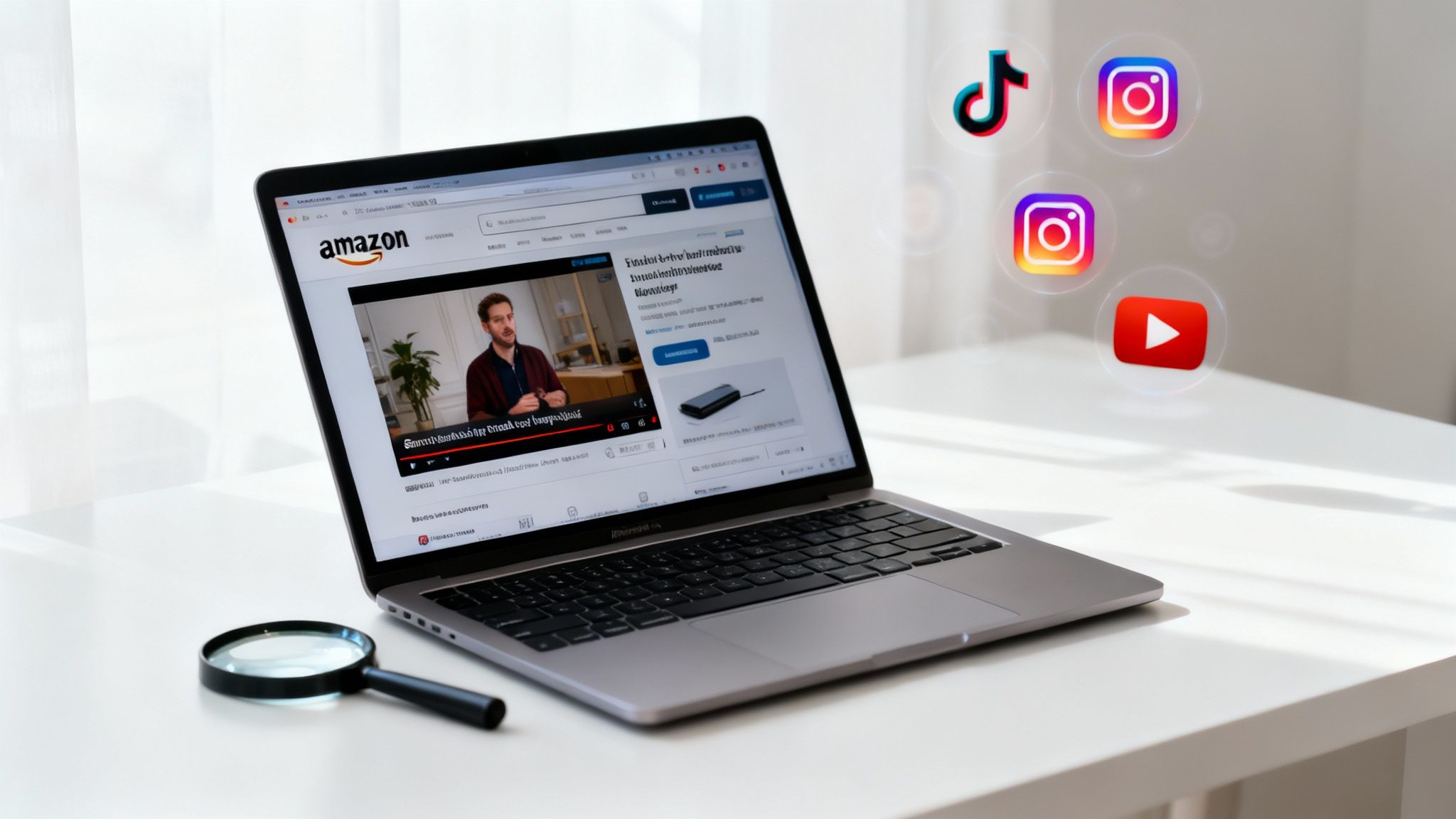
The best place to start your search is often Amazon itself. While there isn't a searchable database of every influencer, you can find high-potential partners if you know where to look.
A practical starting point is the video reviews on your top competitors' product pages. This is a goldmine. Look for creators making high-quality, helpful videos that guide shoppers. A polished, authentic review is a strong indicator that the creator understands the Amazon ecosystem and knows how to connect with buyers.
Another method is to explore existing Amazon Influencer Storefronts. You can find these by watching Amazon Live streams or browsing the #FoundItOnAmazon feed. When you find a creator in your niche, their storefront acts as their portfolio, showing you exactly what kinds of products they endorse.
An influencer's storefront organization speaks volumes. A well-organized page with themed collections shows a high level of dedication and an understanding of their audience's needs, marking them as a potentially valuable and professional partner.
While sales happen on Amazon, discovery often starts on social media. Influencers build their communities on platforms like TikTok, Instagram, and YouTube, so your job is to find the ones who are already sending their followers to Amazon. This requires some detective work with the right keywords and hashtags.
Tailor your search for each platform:
[your product category] finds or things TikTok made me buy. Keep a close eye on massive hashtags like #AmazonFinds, #AmazonHaul, and #TikTokMadeMeBuyIt.[your product] unboxing, best [product category] on Amazon, or [your competitor] review. YouTubers almost always place their storefront and affiliate links directly in the video description.Mastering these social searches helps you build a powerful discovery engine that finds creators where their audience is already engaged. This multi-platform approach is a key part of building a strong brand presence, something we dive deeper into in our guide on essential social media marketing tips for growth.
Manual research on Amazon and social media works, but it can be time-consuming, especially at scale. This is where third-party influencer discovery platforms become a game-changer. These tools aggregate data on thousands of creators, allowing you to filter them by specific criteria.
With a dedicated platform, you can create a shortlist of potential partners in minutes by filtering for:
These tools transform a manual hunt into a smart, data-driven process. Once you have a list of promising creators, the next step is outreach. To make that even easier, using effective email address lookup tools can be a great help in connecting directly with your top picks. This mix of on-platform research, social listening, and powerful software gives you a complete system for finding the perfect Amazon influencers for your brand.
Having a long list of potential influencers is a great start, but it's just that—a start. Now it's time to optimize by digging in and identifying who is actually worth partnering with. This is where you separate the truly valuable creators from the ones who just look good on paper.
This phase comes down to a critical vetting process that goes beyond follower counts, followed by a thoughtful outreach strategy that gets a reply.
Before you send a single email, put your top candidates under the microscope. Real influence isn’t measured by audience size; it’s measured by audience trust. You're looking for a genuine connection, not just big numbers.
Start by digging into their comment sections. Are people asking real questions about the products? Are they sharing their own experiences? Or is it just a sea of fire emojis and generic "love this!" comments from bots? Authentic communities have real conversations.
Next, check for consistency. A creator with one viral video followed by ten that barely cracked a thousand views might be a one-hit wonder, not someone with a loyal, returning audience. Look for a healthy and consistent view-to-like ratio across their content. This indicates that their audience is consistently engaged, not just showing up for random viral hits.
To keep your analysis objective, use a structured checklist. Think of it as your scorecard for evaluating every potential partner.
Here’s a simple framework to get you started:
| Metric | What to Look For | Potential Red Flag |
|---|---|---|
| Audience Sentiment | Positive, curious, and conversational comments showing genuine interest in what the creator recommends. | A high ratio of spam, negative comments, or generic, bot-like replies. |
| Content Quality | Clear video and audio, well-lit shots, and a consistent aesthetic that fits your brand’s vibe. | Poor production value, blurry visuals, or a chaotic feed with no clear style or focus. |
| Disclosure Practices | Clear and consistent use of FTC-required disclosures like #ad or #sponsored in past partnerships. | Hiding disclosures or failing to mention partnerships, which can create legal risks for you. |
| Brand Alignment | A history of partnering with brands that are complementary (not directly competitive) to yours. | A feed that feels like a billboard, promoting anything and everything without a clear niche. |
This systematic vetting process is foundational to a successful partnership. It ensures you invest your resources in creators who can deliver real value and represent your brand appropriately.
Top-tier influencers are inundated with partnership requests. A generic, copy-paste email is a one-way ticket to their trash folder. To stand out, your outreach needs to be personalized, professional, and focused on mutual value. This is a business proposal, not a fan letter.
Your message should immediately show you’ve done your homework. Mention a specific video or post of theirs you enjoyed and explain why it resonated with you and makes them a good fit for your brand. Instead of, "We like your content," try something like, "Your recent video on kitchen organization was fantastic—the way you demonstrated the product's use in a small space is exactly how our customers use our storage solutions."
The goal of your first message is simple: start a conversation. Position the partnership as a collaboration where both parties win—you get authentic promotion, and they get to share a great product that their audience will genuinely appreciate.
Finally, be direct and clear about what’s next. Propose a brief call to discuss the partnership in more detail and be upfront about what you're offering, whether it's free products, a flat fee, or a commission-based structure. Respecting their time from the get-go sets a professional tone and shows you’re serious about building a real partnership.
Getting this right often requires dedicated expertise, which is a key part of understanding the role of digital marketing agencies in scaling your brand.
You’ve identified the right creators and optimized your outreach strategy. Now it’s time to launch the campaign and see the results. This is the Amplification stage, where your careful planning turns into measurable sales growth.
The key to a successful launch is getting the logistics right from the start. That means putting a clear, professional collaboration agreement in place to protect both you and the influencer.
A casual handshake deal won’t cut it in professional influencer marketing. A formal, written contract is non-negotiable. It sets clear expectations, provides a roadmap for the collaboration, and ensures everyone is on the same page from day one.
Your agreement should clearly define several key areas:
Establishing this clarity upfront prevents potential headaches and sets the stage for a smooth, productive partnership.
Compensation models vary depending on your budget, goals, and the influencer you're working with. The most common models are product seeding and flat-fee payments, often used in combination.
You can also enhance the partnership with commission-based payments through Amazon's own affiliate program. It’s important to stay current on how these structures evolve. For example, in 2025, Amazon’s influencer commission rates will range from 1% to 20%, depending on the product category. During major sales events like Prime Day, Amazon often temporarily doubles commissions in key categories to supercharge influencer activity. You can learn more about these evolving influencer payment structures to help shape your budget.
Beyond payment, FTC compliance is your legal responsibility, not the influencer's alone. All sponsored content must be clearly and conspicuously disclosed using hashtags like #ad or #sponsored. This is a legal requirement to maintain transparency with consumers.
This is where we connect influencer posts directly to Amazon sales. The single most important tool for measuring the ROI of your off-Amazon marketing is Amazon Attribution.
This free tool from Amazon gives you direct line-of-sight into how your influencer campaigns are performing.
By creating unique tracking links for each influencer, you can see exactly how many clicks, detail page views, add-to-carts, and—most importantly—sales each partner generates. This data is pure gold. It eliminates guesswork and lets you make smart, data-backed decisions about where to invest your marketing dollars.
The dashboard provides a clean visualization of campaign performance, connecting off-site activity to on-site results.
This insight helps you identify which influencers are driving not just traffic, but converting traffic.
With this data, you can finally answer the most important questions:
This is how you shift from hoping your influencer marketing is working to knowing it is. The insights from Amazon Attribution are foundational to mastering your broader advertising strategy. For a deeper dive into optimizing your ad spend, check out our guide to mastering Amazon advertising ROI and growth.
When you measure what matters, you create a powerful feedback loop. You can double down on the influencers and channels that deliver real results, cut spending on what doesn’t, and continuously amplify your success for every campaign to come.
Diving into Amazon influencer marketing often brings up many questions. Any strategy that impacts your brand's growth and bottom line deserves a close look. We've gathered the most common questions we hear from brands to help you navigate this space with confidence.

This section provides straightforward, actionable answers to clear up the confusion and prepare you for your first campaign.
This is a frequent question, and the answer is: it varies widely. Amazon sets the commission rates, which can range from 1% to 20%, depending entirely on the product category.
For instance, categories like Luxury Beauty might pay out around 10%, while categories like Home or Kitchen typically hover in the 3% to 5% range. You must know your category's rate before negotiating with influencers, as it directly impacts their potential earnings from promoting your products.
Practical Takeaway: Keep an eye out for boosted commission rates during major shopping events like Prime Day. Amazon often temporarily doubles commissions in key categories to incentivize creators to drive a flood of traffic when shoppers are most active.
While both are part of the Amazon Associates program, there are key differences that matter for brands. Think of them as two distinct partnership tiers within Amazon's ecosystem.
amazon.com/shop/influencername) where they can curate lists of recommended products.For brands, that storefront is a game-changer. It acts as a dedicated, trusted shopping guide for an influencer’s audience, making their recommendation far more powerful than a simple affiliate link.
Yes, especially when you're starting out or working with nano and micro-influencers. This practice, often called product seeding or gifting, is very common. Many creators with smaller, highly engaged audiences are happy to receive free products in exchange for an honest review and content.
However, this model has limits. Once you start targeting more established influencers or requesting specific deliverables (like a guaranteed number of posts or a dedicated video), you should be prepared to pay a flat fee in addition to providing the free product. A hybrid approach often works best: offer the product and enhance the deal with a fee or a performance-based bonus.
You don't need one, but a good agency or growth partner can significantly accelerate the process and improve results. Finding, vetting, negotiating with, and managing influencers is a substantial time commitment. Handling it all manually—scrolling hashtags, analyzing profiles, and managing communications—can quickly become a full-time job.
Partnering with an expert streamlines the entire process. They typically have existing relationships with creators and use powerful software to make discovery and vetting more efficient. They also handle contracts, logistics, and reporting, which frees you up to focus on your core business.
Ultimately, deciding how to find influencers on Amazon is a trade-off between your budget, available time, and in-house expertise.
At RedDog Group, we don't just find influencers—we build integrated growth strategies that turn creator partnerships into measurable revenue across all your sales channels. If you're ready to move beyond guesswork and amplify your brand's presence, we're here to build the plan.
Leave a comment: