
Published: March 2020 | Last Updated:January 2026
© Copyright 2026, Reddog Consulting Group.

Over 80 percent of American retail brands face tough competition when trying to stand out in crowded online marketplaces. For e-commerce managers leading small to medium-sized retail operations, a strong digital presence is essential for growing sales and reaching new customers. This guide provides clear strategies to help you analyze your brand’s online footprint, optimize product listings, and improve marketplace performance with practical steps you can put into action.
| Key Insight | Clarification |
|---|---|
| 1. Conduct a Digital Audit | Evaluate all digital platforms to identify strengths and weaknesses in online presence. Use metrics like website traffic and social media engagement. |
| 2. Optimize Product Listings | Craft keyword-rich product titles and descriptions to enhance search visibility, improving customer discovery of your products. |
| 3. Strengthen Omnichannel Marketing | Integrate online and offline strategies for a seamless customer experience, ensuring consistent messaging across all platforms. |
| 4. Utilize Marketplace Advertising | Leverage targeted ads on platforms like Amazon to increase product visibility, adapting strategies based on performance metrics. |
| 5. Implement Continuous Monitoring | Regularly analyze marketing performance metrics to adjust strategies promptly for optimal online visibility and engagement. |
Evaluating your retail brand’s digital landscape starts with a comprehensive analysis of your current online footprint. This critical first step helps you understand your existing digital positioning and identify strategic improvement opportunities. Digital progress insights from global research indicate that retail brands must systematically map their digital infrastructure, customer engagement channels, and technological capabilities.
Begin by conducting a thorough audit across multiple digital platforms. Examine your website performance, social media presence, marketplace listings, and online customer interaction metrics. Key areas to review include website traffic analytics, social media follower engagement rates, search engine rankings, online review volumes, and conversion rates across different digital channels. Pay special attention to how consistently your brand messaging appears across platforms and whether your digital touchpoints effectively communicate your unique value proposition.
Your digital assessment should also evaluate technical readiness and potential gaps in your online strategy. This means analyzing your e-commerce capabilities, mobile responsiveness, digital marketing effectiveness, and the integration of emerging technologies like AI-driven customer experiences. Understanding these elements will provide a clear roadmap for enhancing your online visibility and competitive positioning in the digital marketplace.
Pro tip: Create a comprehensive spreadsheet tracking your digital metrics, including key performance indicators for each online channel, to systematically monitor your progress and identify improvement areas.
Here’s a summary table highlighting key digital metrics to monitor for your retail brand:
| Metric Category | Example Metric | Business Impact |
|---|---|---|
| Website Performance | Page load speed | Influences conversion rates |
| Social Media Engagement | Follower growth rate | Measures brand awareness |
| Search Visibility | Search engine ranking | Affects discoverability |
| Marketplace Performance | Conversion rate by channel | Reveals channel effectiveness |
| Technical Readiness | Mobile responsiveness score | Impacts user experience on devices |
Optimizing your product listings is crucial for increasing online visibility and driving sales in competitive digital marketplaces. Consumer search behavior research reveals that strategic product attribute optimization can significantly reduce search friction and improve consumer discovery of your products.

Start by crafting compelling product titles and descriptions that incorporate relevant keywords while maintaining readability. Focus on using clear, specific language that matches potential customer search terms. Analyze top performing listings in your product category and identify common keyword patterns and descriptive elements that resonate with your target audience. Ensure your product images are high quality, showcasing multiple angles and providing clear visual representations of your offerings. Include detailed specifications, dimensions, materials, and unique selling points that help customers make informed purchasing decisions.
Technical optimization extends beyond text and images. Implement structured data markup to help search engines better understand your product details, improve rich snippet displays, and increase click through rates. Cross reference your listings across different marketplaces to maintain consistency and leverage product listing optimization strategies that maximize your digital presence.
Pro tip: Regularly update your product listings with current trends, customer feedback, and performance analytics to maintain relevance and improve search rankings.
Strengthening your omnichannel marketing requires a holistic approach that seamlessly integrates online and offline customer experiences. Academic research on retail marketing strategies emphasizes the critical importance of creating unified interactions that transcend traditional channel boundaries.
Develop a comprehensive strategy that synchronizes your digital and physical marketing efforts. This means aligning your messaging across websites, social media, mobile apps, physical stores, and customer service channels. Implement technologies that enable real time data sharing and personalization, such as customer relationship management systems that track individual preferences and purchase histories. Explore innovative approaches like Buy Online Pickup In Store (BOPIS) models that provide seamless integration between digital and physical retail experiences, allowing customers to enjoy the convenience of online shopping with the immediacy of in store pickup.
Focus on creating a consistent brand experience by training your team to deliver uniform messaging and service quality across all touchpoints. This means developing comprehensive communication protocols, standardizing customer interaction guidelines, and investing in cross channel staff training. Monitor and analyze customer journey data to identify friction points and continuously refine your omnichannel approach, ensuring that each interaction feels personalized and interconnected.
Pro tip: Invest in flexible IT infrastructure that allows real time data synchronization across all marketing and sales channels to enable truly dynamic omnichannel experiences.
Masterful marketplace advertising requires strategic use of digital tools that amplify your product visibility and drive targeted customer engagement. Digital advertising research from marketing experts reveals that sophisticated advertising platforms offer unprecedented opportunities for retail brands to reach precise customer segments.
Start by understanding the unique advertising ecosystems of major marketplaces like Amazon, Walmart, and eBay. Each platform offers specific sponsored listing options, targeted ad formats, and algorithmic placement strategies. Develop a data driven approach by analyzing platform specific metrics such as click through rates, conversion percentages, and customer acquisition costs. Marketplace advertising strategies from leading business publications emphasize the importance of creating compelling ad content that aligns with platform algorithms while maintaining authentic brand messaging.
Implement a systematic testing approach for your marketplace advertisements. Create multiple ad variations to explore different visual designs, copywriting approaches, and targeting parameters. Utilize advanced features like retargeting campaigns, lookalike audience modeling, and performance tracking tools to continuously refine your advertising strategy. Monitor your ad performance meticulously, adjusting bids, keywords, and creative elements based on real time data insights.
Pro tip: Allocate 10 to 15 percent of your advertising budget for experimental campaigns that test innovative targeting approaches and emerging marketplace advertising technologies.
The following table compares popular marketplace ad platforms used by retailers:
| Platform | Main Ad Feature | Targeting Capability |
|---|---|---|
| Amazon | Sponsored Products | Audience & keyword targeting |
| Walmart | Sponsored Search Ads | Category & demographic data |
| eBay | Promoted Listings | Behavioral & placement focus |
Successfully increasing online visibility requires a systematic approach to analyzing and adjusting your digital marketing performance. Digital brand presence research highlights the critical importance of continuous monitoring and strategic adaptation of your marketing efforts.
Implement a comprehensive analytics framework that goes beyond surface level metrics. Retail analytics strategies recommend using multiple analytical perspectives descriptive, diagnostic, predictive, and prescriptive analytics to gain a holistic understanding of your online performance. Track key performance indicators such as website traffic, conversion rates, customer engagement metrics, social media interactions, and marketplace visibility scores. Utilize advanced analytics tools that provide real time insights into customer behavior, allowing you to quickly identify trends, strengths, and potential improvement areas in your digital marketing strategy.
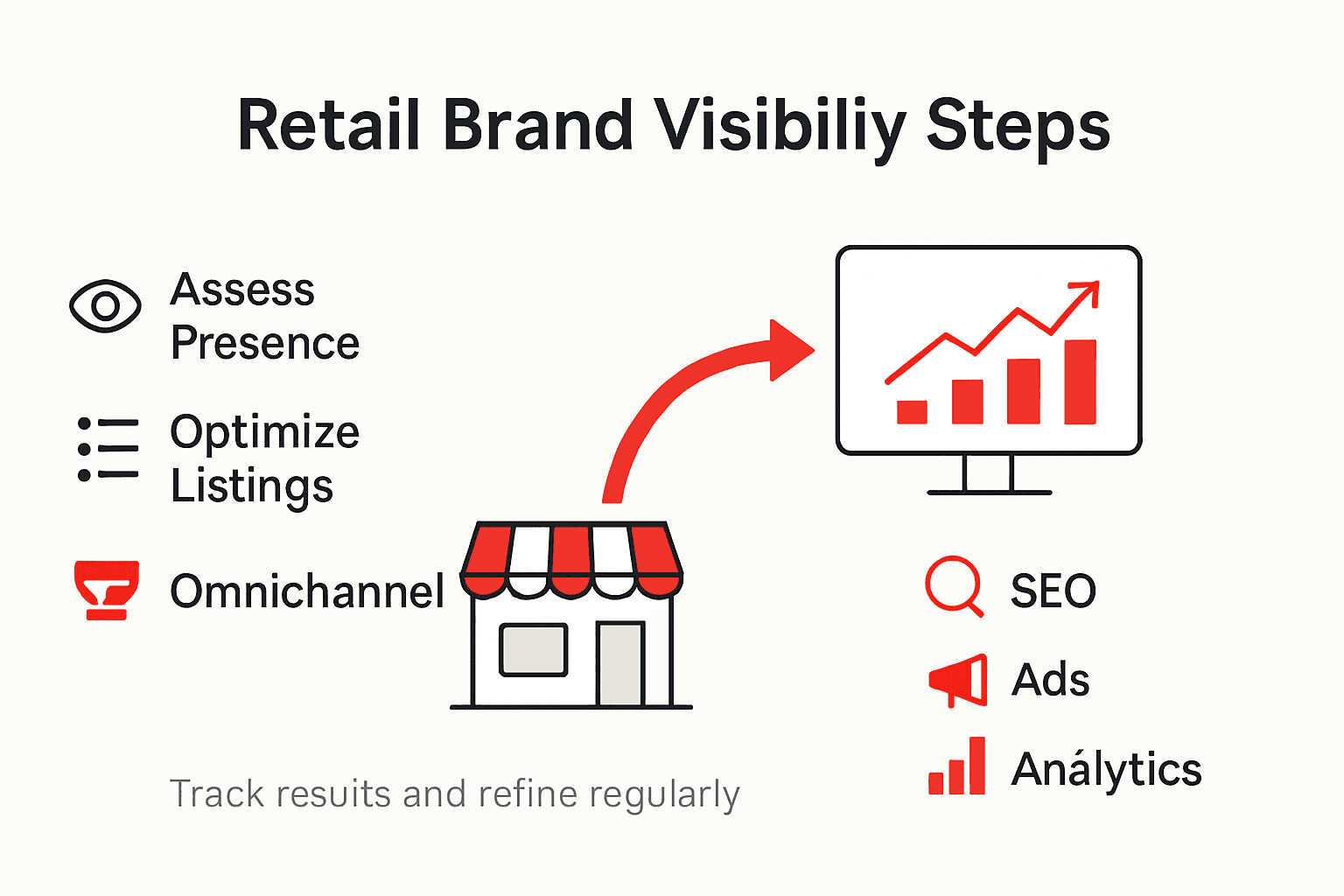
Develop a responsive optimization process that allows for rapid iterations based on your analytical findings. Create a structured feedback loop where you regularly review performance data, identify underperforming channels or tactics, and quickly implement strategic adjustments. This might involve refining keyword strategies, adjusting ad targeting, updating product descriptions, or reallocating marketing resources to the most effective channels. Remember that digital marketing is an ongoing process of experimentation and refinement.
Pro tip: Schedule monthly strategic review sessions to comprehensively analyze your digital performance metrics and align your marketing approach with emerging consumer trends and platform algorithms.
Increasing online visibility for retail brands involves navigating complex challenges like optimizing product listings, strengthening omnichannel marketing, and continuously refining digital strategies. If you find yourself overwhelmed by inconsistent brand messaging, low search rankings, or underperforming marketplace ads, you are not alone. These pain points can stall growth and limit your brand’s ability to reach new customers in a highly competitive marketplace.
At Reddog Group, we specialize in addressing exactly these challenges. Our Digital & Business Consulting Services by Reddog Consulting provide tailored solutions that enhance your e-commerce presence, optimize product listings, and create seamless omnichannel experiences. With a proven track record managing over 50 brands and 30,000 SKUs, our expertise delivers measurable growth and sustainable revenue increases. We understand how to transform your digital marketing efforts into consistent, results-driven strategies.
Don’t let your retail brand struggle behind the scenes. Partner with Reddog Group to leverage expert insights and actionable strategies that increase your online visibility starting now. Visit our Home page or explore our tailored services at https://reddog.group to take the next step toward mastering your digital marketplace presence.
To assess your retail brand’s current digital presence, conduct a comprehensive audit of your online footprint. Evaluate metrics like website traffic, social media engagement, and search engine rankings to identify strengths and weaknesses.
Optimize your product listings by using clear, relevant keywords in titles and descriptions that align with customer search terms. Regularly update your listings with detailed specifications and current trends to improve search rankings and attract more customers.
To strengthen your omnichannel marketing strategy, create a cohesive plan that integrates your online and offline efforts. Ensure consistent messaging across all platforms and train your team to deliver a unified customer experience.
Effectively leverage marketplace advertising tools by understanding each platform’s unique offerings and performance metrics. Develop targeted ad campaigns and conduct A/B testing by creating multiple variations to refine your approach and maximize visibility.
Monitor key metrics such as website traffic, conversion rates, and social media interactions to gain insights into your online performance. Set up regular reviews of these metrics to quickly adapt your marketing strategies based on real-time data and emerging trends.
Leave a comment: