
Published: March 2020 | Last Updated:March 2026
© Copyright 2026, Reddog Consulting Group.

Choosing the right local marketing strategies can feel overwhelming when you’re managing a CPG brand across multiple retail channels. You’re juggling Amazon listings, Walmart shelf space, and regional distribution while trying to connect with customers in specific neighborhoods and stores. This article cuts through the noise with a practical framework and curated list of local marketing strategies that actually move product off shelves. You’ll learn how to evaluate options based on your brand’s goals, budget, and retail environment, then match the right tactics to your specific market conditions for measurable sales growth.
| Point | Details |
|---|---|
| Align with goals | Local marketing success depends on aligning tactics with brand goals, customer profiles, and available resources. |
| Blend digital and physical | Combining digital precision with in store presence yields stronger retail growth across channels. |
| Use evaluation checklist | Use a structured evaluation checklist to assess reach, measurability, resources, and speed to test and adjust based on results. |
| Map distribution first | Map current retail distribution and focus marketing dollars within a 15 minute drive of stocked stores. |
Before diving into specific tactics, you need a clear framework to evaluate which strategies will actually work for your brand. Effective local marketing depends on aligning strategies with brand goals, customer profiles, and available resources. Start by defining what success looks like: are you building awareness in new markets, driving trial at specific retail locations, or increasing repeat purchases in existing territories?
Your selection criteria should include budget constraints, channel reach potential, and measurement capabilities. A sampling program at farmers markets requires different resources than geotargeted Facebook ads. Consider whether you can track results back to specific stores or regions, since attribution drives future budget decisions. Your retail environment matters too: urban stores with high foot traffic support different tactics than suburban locations where customers arrive by car with shopping lists.
Seasonality and competitive activity shape strategy effectiveness. If competitors flood local radio during holiday periods, your budget might work harder in shoulder seasons or different channels. Evaluate your team’s capacity to execute and manage each strategy. A marketing checklist for SMBs helps systematically vet options without missing critical factors.
Use this evaluation checklist when considering any local marketing strategy:
Pro Tip: Map your current retail distribution before selecting strategies. Focus marketing dollars within a 15-minute drive of stores that actually stock your products, since awareness without availability just frustrates potential customers and wastes budget.
The most effective local marketing strategies for CPG brands blend digital precision with physical retail presence. Blending digital and traditional marketing approaches maximizes retail growth by reaching customers both online and at the point of purchase. Here are proven tactics that drive measurable sales lift for emerging and growth-stage brands.
Local sampling and demonstration programs put your product directly in customers’ hands at farmers markets, community events, or in-store promotions. This works especially well for food and beverage brands where taste drives purchase decisions. Partner with retailers for weekend demos that convert trial into immediate shelf purchases. Track redemption codes or QR codes to measure conversion rates and calculate cost per acquisition.
Geotargeted social media campaigns let you reach specific neighborhoods around retail locations with precision. Use Facebook and Instagram ads targeting users within a 5-mile radius of stores carrying your products. Create location-specific content highlighting nearby retailers, limited-time promotions, or regional product variations. This approach scales efficiently since you can test creative and adjust targeting based on engagement and sales data.

Local influencer partnerships build credibility faster than brand messaging alone. Identify micro-influencers (5,000 to 50,000 followers) in your target markets who align with your brand values. These partnerships cost less than major influencers while delivering higher engagement rates among local audiences. Structure deals around store visits, product reviews, and authentic content that drives followers to nearby retail locations.
Retailer collaboration programs strengthen relationships while driving mutual sales growth. Co-fund local marketing initiatives with retail partners, from shelf signage to parking lot events. Regional chains often have marketing budgets for local activations but need brands to propose specific programs. This approach builds goodwill that translates to better shelf placement and inventory support.
Pro Tip: Layer your local strategies for compound effects. Run geotargeted ads promoting an in-store sampling event, then retarget attendees with purchase incentives. This integrated approach typically delivers 40-60% higher conversion than single-tactic campaigns. Track each touchpoint to understand your digital marketing workflow for retail growth attribution.
Each local marketing strategy offers distinct advantages and challenges depending on your product category, market dynamics, and execution capabilities. Strategy effectiveness varies by product category, market size, and channel integration. Understanding these tradeoffs helps you allocate budget where it delivers the strongest return.
| Strategy Type | Key Benefits | Main Challenges | Best Use Cases |
|---|---|---|---|
| In-store sampling | Direct product trial, immediate conversion, builds retailer relationships | High cost per contact, labor intensive, limited scale | Food/beverage products, new market entry, trial-focused campaigns |
| Geotargeted digital ads | Precise targeting, scalable, measurable ROI, flexible budget | Requires digital sophistication, ad fatigue risk, attribution complexity | Brands with multiple retail locations, products with visual appeal |
| Local influencer partnerships | Authentic endorsements, engaged audiences, content creation | Relationship management, variable quality, difficult to scale | Lifestyle products, brands building community, visual categories |
| Community event sponsorships | Brand visibility, positive associations, local goodwill | Indirect sales impact, difficult measurement, time commitment | Brands with local roots, products tied to activities/occasions |
| Retailer co-marketing | Shared costs, strengthened partnerships, coordinated execution | Requires retailer buy-in, slower decision cycles, limited creative control | Established retail relationships, regional chain focus |
Digital strategies offer superior measurement and flexibility compared to traditional tactics. You can track impressions, clicks, and conversions down to individual store locations, then adjust targeting and creative in real time. However, digital alone rarely drives the emotional connection and trust that in-person interactions create, especially for new or premium products where customers need reassurance before purchase.
Physical tactics like sampling and events deliver higher engagement quality but scale inefficiently. Each interaction costs more in time and money, limiting how many potential customers you can reach. The key is matching strategy intensity to customer lifetime value. If your product generates $200+ in repeat purchases, investing $15-20 per sampling interaction makes economic sense. For lower-margin items, digital strategies with broader reach work better.
Consider these factors when comparing strategies:
Your optimal mix depends on where customers are in their purchase journey and which channels you can execute well. Most successful CPG brands use a small business growth strategy workflow that combines 2-3 complementary strategies rather than spreading budget across too many tactics.
Matching local marketing strategies to your specific situation requires systematic evaluation of your brand positioning, market characteristics, and operational capabilities. Tailoring strategies based on brand positioning and retail environment drives measurable sales improvement. Follow this step-by-step process to identify your highest-impact opportunities.
Audit your current retail footprint and identify concentration areas where you have multiple store locations within a defined geography. Focus initial marketing efforts in these zones where you can achieve meaningful market penetration.
Analyze customer demographics and shopping behaviors in your priority markets using retail partner data, census information, and social media insights. Match strategy selection to how your target customers actually discover and purchase products in your category.
Assess your budget and team capacity realistically. Calculate how much you can invest per market and what level of ongoing management different strategies require. A $10,000 monthly budget supports different tactics than $50,000.
Prioritize 2-3 strategies that align with your brand stage and goals. Early-stage brands building awareness need different tactics than established brands driving repeat purchases or launching new products.
Design pilot programs in 1-2 test markets before scaling. Set clear success metrics (sales lift percentage, cost per acquisition, engagement rates) and measurement timeframes, typically 8-12 weeks for meaningful data.
Track performance weekly and optimize based on what the data shows. Digital campaigns allow rapid iteration, while physical programs need full cycles before evaluation. Compare results against your baseline sales to isolate marketing impact.
Scale winners and cut losers decisively. Expand successful strategies to additional markets while reallocating budget from underperforming tactics. Most brands find that 20% of their strategies drive 80% of incremental sales.
Your product category influences strategy selection significantly. Impulse purchase items (snacks, beverages) benefit from high-visibility sampling and in-store promotions. Considered purchases (supplements, specialty foods) require education-focused content and influencer credibility. Seasonal products need concentrated campaigns timed to peak demand periods.
Competitive intensity shapes budget requirements and channel selection. In crowded categories, you may need to outspend competitors in specific channels or find underutilized tactics where you can dominate. In emerging categories, educational content and retailer partnerships often work better than pure promotional tactics.
Pro Tip: Leverage your omnichannel presence by connecting local marketing to your Amazon and Walmart marketplace listings. Use geotargeted ads to drive online orders for local delivery or pickup, not just in-store purchases. This approach captures customers who prefer digital shopping while supporting your retail partnerships. Your branding strategy for multichannel growth should integrate local tactics with marketplace optimization for maximum efficiency.
Selecting and executing effective local marketing strategies becomes significantly easier with experienced guidance and integrated support. RedDog Group specializes in helping CPG brands like yours navigate the complexity of multichannel retail growth with a contribution-margin-first approach. We understand the real economics of scaling across Amazon, Walmart, wholesale, and regional distribution because we work in these channels daily with brands in your revenue range.
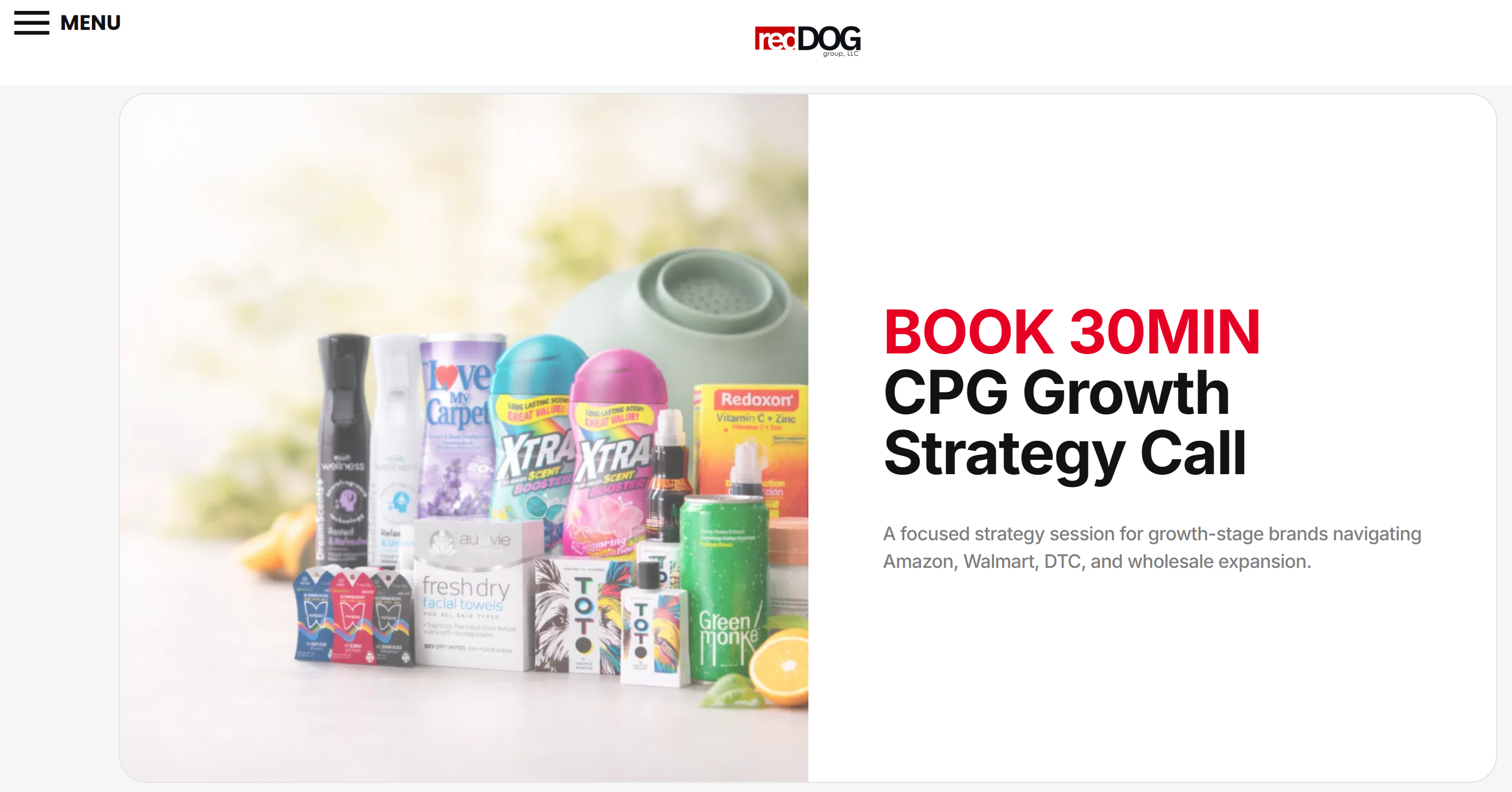
Our omnichannel growth services connect your local marketing efforts with marketplace optimization, pricing strategy, and retail expansion planning. We help you understand what each channel actually contributes to profit and where to invest your marketing dollars for measurable returns. Whether you’re building regional distribution networks or optimizing existing retail relationships, we provide the analytical clarity and execution support that emerging CPG brands need.
Explore our CPG retail growth offer to see how we can help you implement the strategies outlined in this article while avoiding common pitfalls that drain margin. We focus on practical execution and measurable results, not generic marketing advice. Let’s build a local marketing approach that actually moves product and strengthens your retail partnerships.
The most effective tactics combine localized digital advertising with in-store sampling and community event participation. Geotargeted social media campaigns drive awareness among customers near retail locations, while product demonstrations convert interest into immediate purchases. Partnerships with local influencers and retailers amplify reach while building credibility in specific markets.
Track sales lift in specific stores or regions by comparing performance during campaign periods against baseline sales. Monitor engagement metrics on local ads including click-through rates and conversion to store visits. Measure in-person event attendance, sample distribution numbers, and promotion redemption rates as leading indicators. Customer feedback through surveys or social media comments provides qualitative insights into brand perception changes.
Budgets vary significantly by strategy type, with digital campaigns offering flexible scaling from a few hundred dollars while events require $5,000+ fixed commitments. Prioritize strategies where you can clearly measure return on investment and adjust spending based on performance data. Allocate 60-70% of budget to proven tactics and reserve 30-40% for testing new approaches. Factor in both direct costs and team time required for execution and management.
Urban markets support higher-frequency, lower-cost touchpoints like transit advertising, street team sampling, and neighborhood-focused social campaigns due to population density. Suburban markets require broader geographic targeting, often emphasizing in-store promotions at destination retailers where customers drive specifically to shop. Digital strategies work well in both environments but require different radius targeting: 2-3 miles in urban areas versus 10-15 miles in suburban regions.
The most successful approach combines both digital and traditional tactics in an integrated strategy. Digital channels provide precise targeting, flexible budgets, and clear measurement, making them ideal for awareness and consideration stages. Traditional tactics like sampling and events deliver higher-quality engagement and drive trial, particularly for products where taste or experience influences purchase decisions. Allocate budget based on your product category, customer preferences, and where you have execution capabilities rather than choosing one approach exclusively.
Leave a comment: