
Published: March 2020 | Last Updated:November 2025
© Copyright 2026, Reddog Consulting Group.

Most american retailers miss out on growth because they fail to track how each sales channel truly performs. The reality is that multichannel shoppers spend over three times more than single-channel customers. When every platform matters, understanding where you stand and spotting gaps becomes the difference between steady growth and stagnant sales. This guide will give you practical steps to analyze, strengthen, and expand your retail channels, helping you build a business ready to meet the demands of modern consumers.
| Key Insight | Explanation |
|---|---|
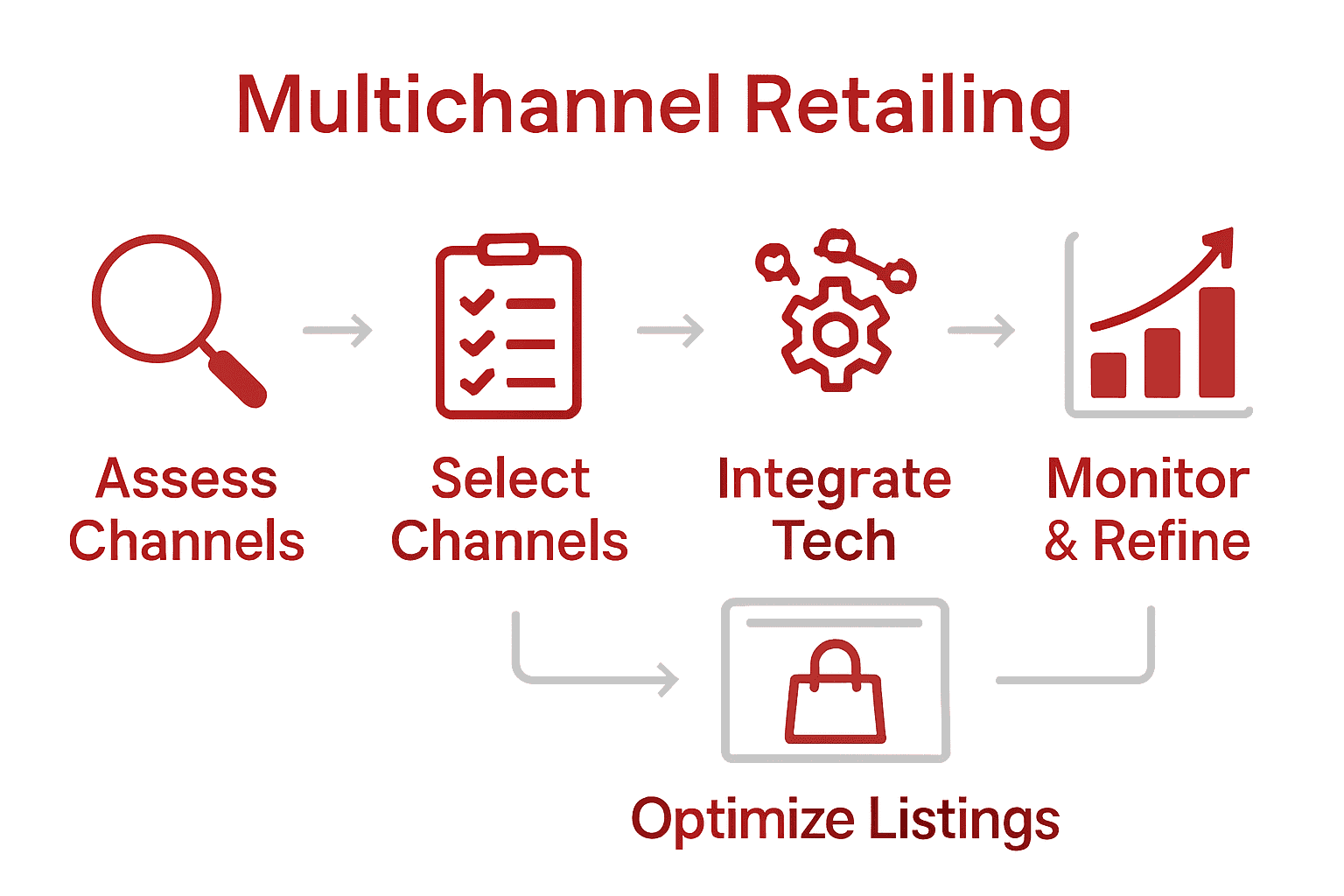
| 1. Assess sales channels comprehensively | Conduct a thorough inventory of all current sales channels to identify growth opportunities and potential gaps. |
| 2. Select channels with high ROI potential | Evaluate sales channels based on performance metrics to prioritize those that align with your goals and market needs. |
| 3. Integrate technology for unified operations | Implement a centralized technology platform to streamline operations, ensuring real-time data synchronization across all channels. |
| 4. Optimize product listings for visibility | Enhance product presentations on each platform using high-quality images and clear descriptions to attract and engage customers. |
| 5. Monitor performance and adjust strategies | Establish a robust performance tracking system to analyze metrics, allowing for continuous refinement of your sales strategies. |
Understanding your current sales landscape is fundamental to building a successful multichannel retailing strategy. This step will help you map out where you are selling now and pinpoint potential opportunities for growth.
According to Harvard Business School Online, gap analysis is a powerful method for measuring the difference between your current operations and your ideal performance. Start by creating a comprehensive inventory of all existing sales channels your business currently uses. List out each platform systematically electronic marketplaces like Amazon digital storefronts social media selling points physical retail locations wholesale channels and any other revenue streams.
Next calculate your performance metrics for each channel. Track key indicators such as total revenue conversion rates average order value customer acquisition costs and market penetration. As Oklahoma State University Extension suggests conducting a sales gap analysis helps identify potential areas of retail sector improvement by revealing leakage points and untapped market potential.
A helpful strategy is to categorize your sales channels into three tiers performance high performing channels with strong revenue streams medium performing channels showing potential and low performing channels that might require significant optimization or potential elimination. This structured approach allows you to make data driven decisions about where to invest your resources and energy.
Warning signals to watch for include channels with consistently low conversion rates high customer acquisition costs or minimal revenue generation. These might indicate strategic misalignment or inefficient resource allocation. Your goal is not just to have multiple sales channels but to have strategically selected channels that contribute meaningfully to your overall business growth.
In the next step we will analyze these findings and develop a targeted strategy for channel expansion and optimization.
In this critical step you will strategically evaluate and select the most promising sales channels to maximize your business growth potential. The goal is to identify channels that align with your target market and offer the highest return on investment.
Georgia Tech researcher Salimah LaForce emphasizes the importance of assessing current capabilities and potential areas for expansion when implementing new strategies. Begin by analyzing your previous performance data from the first step. Look for channels with the following key characteristics strong conversion rates healthy profit margins consistent customer engagement and scalability.
Create a scoring matrix to objectively evaluate potential channels. Rate each channel across multiple dimensions including market size customer demographics potential revenue competition level required investment and alignment with your brand. Give extra weight to channels where you already have some market presence or competitive advantage.
Prioritize channels that demonstrate these critical attributes low entry barriers reasonable customer acquisition costs high growth potential and complementary synergies with your existing sales platforms. For online retailers this might mean exploring retail expansion strategies that integrate multiple digital touchpoints.
Warning signals include channels with extremely high setup costs saturated markets or minimal alignment with your core business model. Not every available sales channel represents a good opportunity just because it exists.
 Strategic selectivity matters more than sheer quantity of channels.
In the next step we will develop a detailed implementation plan for the channels you have identified as most promising.
Successfully unifying your multichannel retail operations requires strategic technology integration that creates seamless communication across all sales platforms. Your goal is to build a connected ecosystem that provides consistent customer experiences and streamlines internal workflows.
EDUCAUSE highlights the importance of fostering innovation through technological integration. Begin by conducting a comprehensive audit of your existing technological infrastructure. Identify current systems inventory management platforms customer relationship management software ecommerce platforms and point of sale technologies.
Implement a centralized platform that can integrate multiple sales channels and provide real time data synchronization. The Essential Guide to Unified Commerce suggests selecting technologies that offer robust API connections and scalable solutions. Look for systems that can automatically sync inventory levels customer data sales information and reporting across all your chosen channels.
As California State University Northridge demonstrates in their technology integration approach prioritize solutions that address existing operational gaps. Focus on technologies that provide comprehensive dashboards enabling you to track performance metrics customer interactions and inventory levels from a single interface.
Warning signals include fragmented systems that require manual data entry complicated integration processes or technologies that cannot scale with your business growth. Your chosen technological solution should reduce complexity not increase it.
In the next step we will develop strategies to train your team on these new integrated technological systems.
In this crucial stage you will transform your product presentations and marketing strategies to capture customer attention and drive conversions across multiple sales channels. Your objective is to create compelling product listings that communicate value and differentiate your brand from competitors.
East Tennessee State University’s Marketing program emphasizes the importance of researching markets and identifying clear value propositions. Start by conducting a comprehensive analysis of your product listings across different platforms. Review your current descriptions images keywords and overall presentation to ensure they effectively communicate your products unique benefits.
Prepare to optimize your listings with strategic elements. Optimizing Amazon Product Listings recommends using high quality images detailed product descriptions compelling titles and relevant keywords that improve search visibility. Create variations of your product descriptions tailored to each specific sales channel while maintaining consistent brand messaging.
As Mercer University’s Career Development insights suggest focus on managing customer relationships through data driven marketing tactics. Develop targeted marketing campaigns that speak directly to your ideal customer segments. Use customer feedback analytics and performance metrics to continuously refine your product positioning and messaging.
Warning signals include generic product descriptions keyword stuffing low quality images or marketing messages that fail to differentiate your offerings. Your goal is to create listings that not only inform but also emotionally connect with potential buyers.
In the next step we will establish performance tracking mechanisms to measure the effectiveness of your optimized product listings and marketing strategies.
This critical step transforms raw sales data into actionable insights that will continuously improve your multichannel retail performance. Your goal is to develop a systematic approach for tracking key performance indicators and making strategic adjustments based on real world results.
New York Medical College’s approach to professional development demonstrates the importance of continuous learning and improvement. Implement a comprehensive performance tracking system that captures metrics across all sales channels. Key indicators to monitor include sales conversion rates inventory turnover customer acquisition costs average order value and channel specific revenue performance.
Utilize advanced sales conversion rate tracking tools to analyze your performance granularly. Create a centralized dashboard that aggregates data from all platforms enabling you to quickly identify trends strengths and potential areas for optimization. Develop a quarterly review process where you systematically assess these metrics and develop targeted improvement strategies.
Establish a feedback loop that connects performance data with strategic adjustments. Segment your analysis by product category sales channel customer demographics and seasonal variations. This nuanced approach allows you to make precise targeted refinements rather than broad unfocused changes.
Warning signals include stagnant or declining metrics persistent underperformance in specific channels or consistent customer feedback indicating systemic issues. Your monitoring should not just collect data but actively inform strategic decision making.
In the final step we will develop a comprehensive scaling strategy based on the insights gathered from our performance monitoring and analysis.
Expanding your sales channels and integrating technology can feel overwhelming when trying to optimize product listings and marketing strategies across diverse platforms. This guide highlights common challenges such as identifying profitable channels, unifying operations through technology, and monitoring performance to sustain growth. If these sound like hurdles you are facing, you are not alone. The feeling of juggling multiple sales streams without clear visibility or results can stall your business growth.
Reddog Group specializes in helping small and medium-sized businesses master omnichannel retailing with proven strategies that turn complexity into opportunity. Our Digital & Business Consulting Services by Reddog Consulting offer tailored solutions in marketplace management, Amazon FBA, DTC channels, and seamless online-offline sales integration. With experience managing over 30,000 SKUs and 50 brands, we empower you to optimize product listings, streamline inventory, and boost conversions through data-driven approaches.
Unlock the full potential of your multichannel retail strategy today. Visit Reddog Group to explore our expert services and see how our strategic guidance can help you conquer the complexities outlined in the “Step-by-Step Guide to Multichannel Retailing Success.” Ready to scale with confidence? Take the first step now and transform how you sell across channels with Reddog’s proven expertise and customized solutions.
Start by creating a detailed inventory of all your existing sales channels, including online marketplaces, social media, and physical locations. Then, evaluate their performance using metrics such as revenue and conversion rates to identify gaps for improvement.
Focus on channels that have strong conversion rates, healthy profit margins, and the potential for scalability. Create a scoring matrix that evaluates market size, customer demographics, and required investment to prioritize your best opportunities.
Conduct an audit of your current technology to identify gaps, then implement a centralized platform that can sync data across all channels. This will streamline your operations and improve customer experience, so aim to complete this integration within 60 days.
Enhance your product presentations by using high-quality images, compelling descriptions, and relevant keywords for better visibility. Aim to tailor listings for each sales channel while maintaining consistent branding to attract and engage customers.
Establish a performance tracking system by regularly collecting data on key metrics like conversion rates and average order values. Review this data quarterly to identify trends and make targeted adjustments to improve your sales strategy.
Be alert for low conversion rates, high customer acquisition costs, or stagnant sales metrics, as these can indicate larger issues in your strategy. Address these concerns promptly to ensure your channels remain aligned with your overall business goals.
Leave a comment: