
Published: March 2020 | Last Updated:November 2025
© Copyright 2026, Reddog Consulting Group.

Omnichannel analytics is popping up everywhere and retailers are starting to take serious notice. Research from MIT Sloan shows businesses that use omnichannel analytics are outperforming their competitors with greater customer insight and sharper operational efficiency. That sounds technical and maybe even a little overwhelming at first. But the biggest unlock is not just tracking customers everywhere they go. It is how these advanced insights can actually predict what people want before they even ask.
| Takeaway | Explanation |
|---|---|
| Omnichannel analytics integrates various data sources | This approach consolidates customer interactions from websites, stores, apps, and social media for comprehensive insights. |
| Enhances personalized marketing strategies | By understanding customer behavior, businesses can tailor their marketing efforts to better meet individual preferences. |
| Optimizes inventory management across channels | Retailers can synchronize stock levels and make informed decisions based on unified data from all sales channels. |
| Facilitates real-time decision-making | Access to timely insights enables businesses to respond effectively to customer needs and market changes. |
| Transforms data into strategic business intelligence | Advanced analytics allows companies to derive meaningful insights that improve customer engagement and retention. |
Omnichannel analytics represents a sophisticated approach to understanding customer interactions across multiple sales and communication channels. Unlike traditional single-channel tracking, this advanced strategy provides businesses with comprehensive insights into customer behavior, preferences, and journey mapping.
At its core, omnichannel analytics integrates data from various touchpoints including websites, mobile apps, physical stores, social media platforms, and customer service interactions. Our comprehensive business services guide can provide additional context about implementing such strategies.
The primary goal is to create a unified view of customer experiences by analyzing interconnected data points. This approach allows businesses to track how customers move between different channels, understanding their preferences, purchasing patterns, and engagement levels with unprecedented precision.
According to research from MIT Sloan Management Review, omnichannel analytics has become crucial for businesses seeking competitive advantages in today’s digital marketplace. The strategic benefits include:
By leveraging advanced data analysis techniques, businesses can transform raw customer interaction data into actionable strategic insights. This approach enables companies to anticipate customer needs, optimize marketing strategies, and create more seamless, personalized experiences across all engagement platforms.
The role of omnichannel analytics extends beyond mere data collection. It represents a fundamental shift in how businesses perceive and interact with their customers, moving from fragmented channel-specific approaches to a more integrated, customer-centric strategy.
Retailers today face unprecedented challenges in understanding and engaging customers across complex, interconnected sales environments. Omnichannel analytics emerges as a critical strategic tool for businesses seeking to navigate these intricate consumer interaction landscapes.
Modern retail environments are no longer linear. Customers seamlessly transition between online websites, mobile applications, physical stores, and social media platforms during their purchasing journey. Our digital consulting experts recognize this complexity and emphasize the need for comprehensive analytics.
Traditional tracking methods fall short in capturing these multifaceted interactions.
Omnichannel analytics provides a holistic view, revealing how customers research, compare, and ultimately make purchasing decisions across different touchpoints.
According to research from the University of Arkansas, retailers leveraging advanced analytics can achieve significant operational improvements. The strategic benefits include:
By understanding granular customer interaction data, retailers can create more targeted, responsive, and efficient business strategies. This approach transforms raw data into actionable insights that drive competitive advantage.
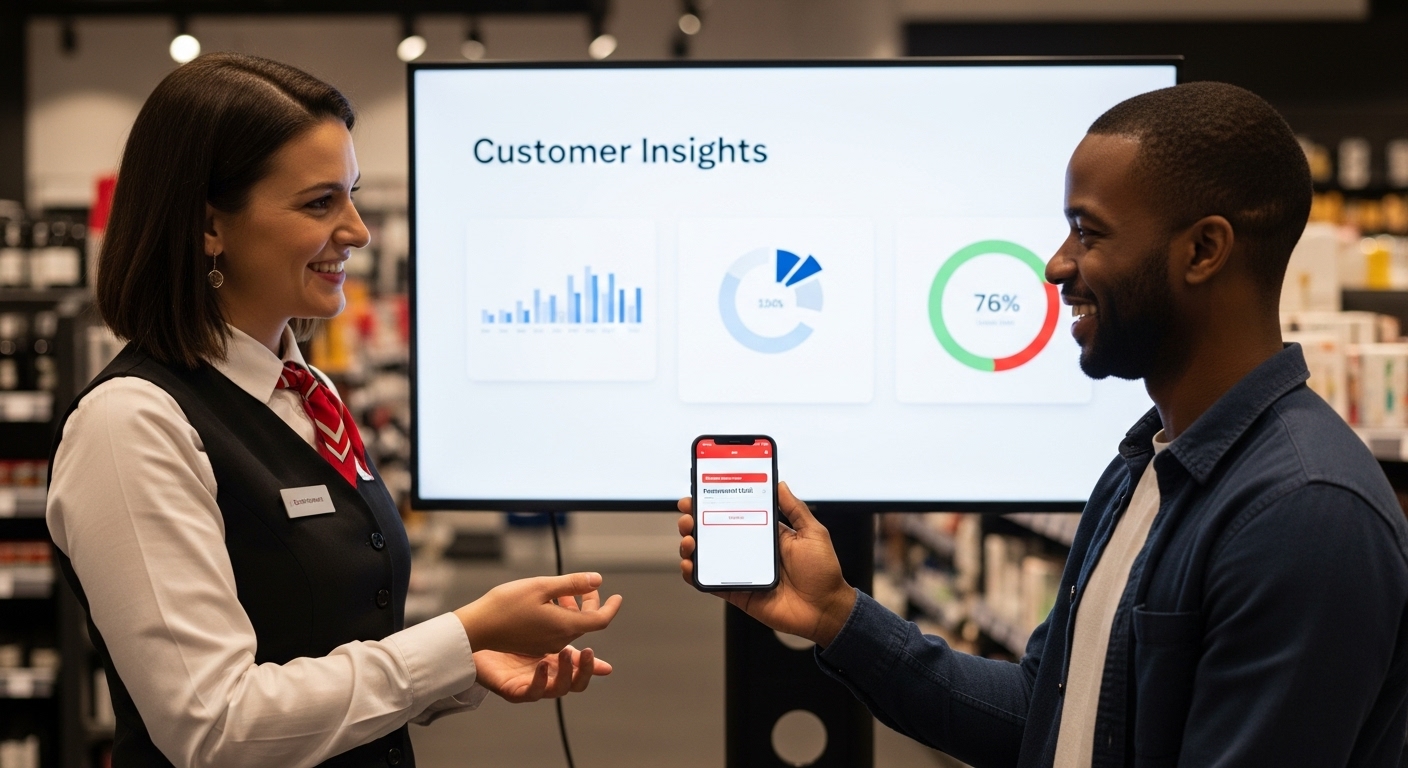
Omnichannel analytics represents more than a technological solution. It is a fundamental reimagining of how retailers understand, engage, and serve their customers in an increasingly digital and interconnected marketplace.
Omnichannel analytics transforms raw customer interaction data into strategic business intelligence through sophisticated data integration and analysis techniques. By connecting disparate data sources, businesses can create a comprehensive understanding of customer behaviors and preferences.
The foundation of omnichannel analytics lies in aggregating data from multiple touchpoints. This includes website interactions, mobile app usage, in-store purchases, social media engagement, customer service interactions, and digital marketing responses. Learn more about our data privacy approach to understand how businesses responsibly manage these complex data ecosystems.
Advanced analytics platforms utilize machine learning algorithms to standardize and normalize data from these diverse sources, creating a unified customer profile that tracks interactions across different channels and platforms.
According to research from Cornell University’s Omnichannel Leadership Immersion Program, effective omnichannel analytics involves several critical analytical techniques:
These analytical methods enable businesses to transform complex data into actionable strategic insights. By understanding customer preferences, businesses can design more personalized experiences, optimize marketing spend, and improve overall operational efficiency.
Omnichannel analytics represents a strategic approach that goes beyond traditional data analysis. It provides a dynamic, integrated view of customer interactions, allowing businesses to adapt quickly to changing consumer behaviors and market dynamics.
Omnichannel analytics represents a complex ecosystem of interconnected technologies, methodologies, and strategic approaches designed to provide comprehensive insights into customer interactions across multiple channels.
The technological foundation of omnichannel analytics involves sophisticated data collection, integration, and processing systems. These platforms must seamlessly aggregate information from diverse sources like websites, mobile applications, physical stores, social media platforms, and customer support channels. Learn more about our comprehensive business services to understand how these complex systems are implemented.
Modern omnichannel analytics platforms utilize advanced machine learning algorithms and artificial intelligence to transform raw data into meaningful, actionable insights. These technologies enable real-time data processing, pattern recognition, and predictive modeling.
According to research from the CDP Institute, successful omnichannel analytics relies on several critical metrics and components:
These metrics provide businesses with a holistic view of customer behavior, enabling more sophisticated and targeted strategic decision-making.
To clarify the main metrics and analytical components discussed, the table below summarizes essential elements of a successful omnichannel analytics strategy and their business significance.
| Metric / Component | Description |
|---|---|
| Customer Lifetime Value (LTV) | Tracks the total revenue a customer generates over their entire relationship |
| Recency and Repurchase Rate | Measures how recently and frequently customers return and make purchases |
| Customer Satisfaction Measurement | Assesses satisfaction levels through surveys, feedback, or engagement scores |
| Interaction Volume Assessment | Evaluates the number and type of interactions across different channels |
| Customer Profitability Evaluation | Identifies the profitability of customers by segment and channel |
| Predictive Modeling | Uses data to forecast customer behaviors and preferences |
| Segmentation Analysis | Groups customers for targeted marketing based on behavior and characteristics |
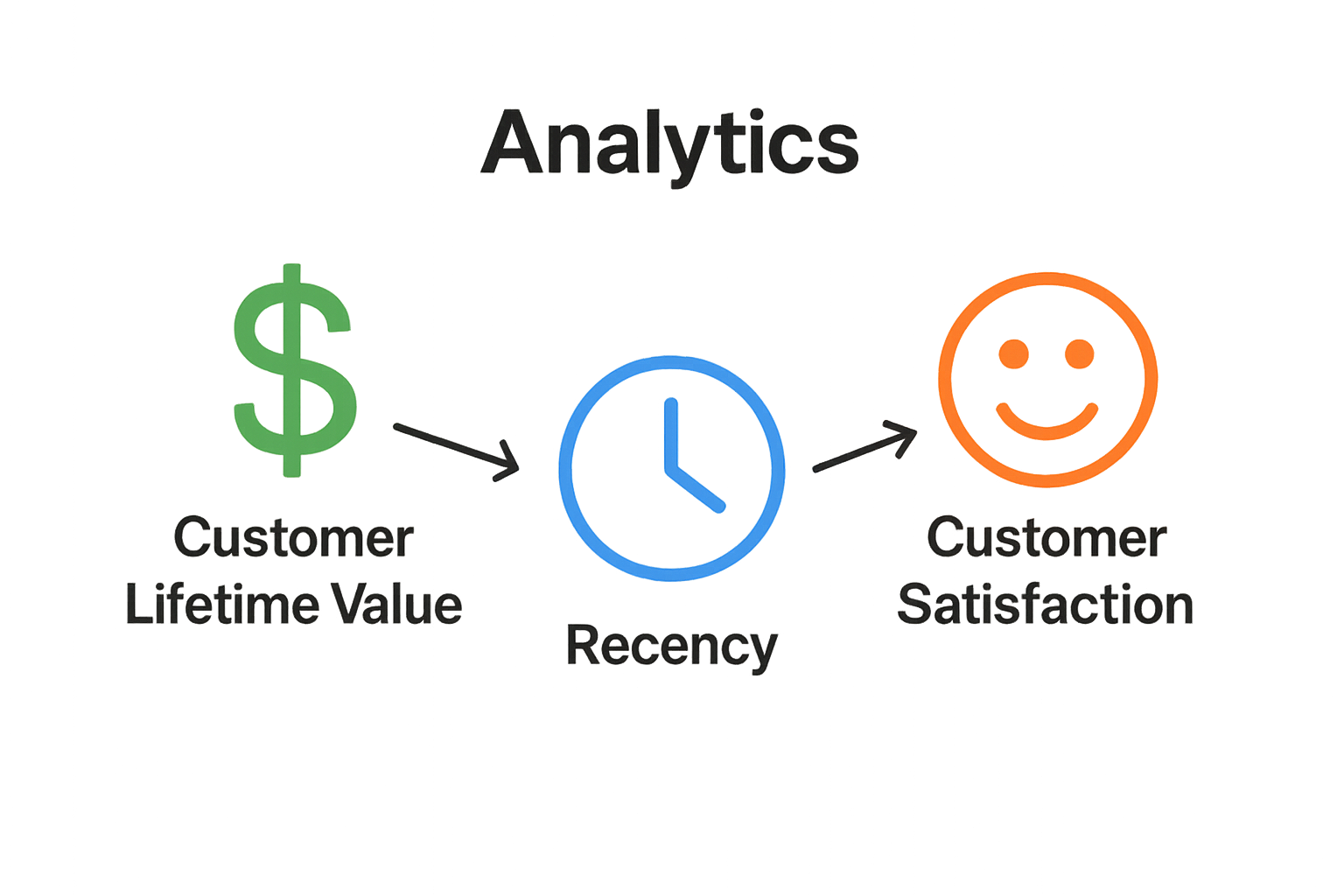 By understanding these interconnected data points, organizations can develop more personalized and effective customer engagement strategies.
Omnichannel analytics is not merely a technological solution but a strategic approach that requires continuous refinement, deep understanding of customer journeys, and a commitment to leveraging data-driven insights for business transformation.
Are you finding it difficult to piece together scattered customer data and transform it into actionable business growth? Many businesses struggle with connecting digital touchpoints, optimizing performance across channels, and achieving that coveted unified customer view. With the increasing complexity of consumer journeys, your ability to track, predict, and streamline customer interactions is what sets your brand apart. Omnichannel analytics is not just a buzzword—it is the difference between simply collecting data and actually driving measurable results. Discover how our Digital & Business Consulting Services bridge those gaps and turn insights into real revenue.
Start building a connected and efficient retail ecosystem today. Visit Reddog Group to explore how our proven expertise in omnichannel integration, digital marketing, and marketplace management can help expand your reach and multiply your sales. Take the first step now and gain a true competitive edge with a partner that understands your challenges and goals. Need a deeper look? Learn more about our process and strategic solutions tailored for your business.
Omnichannel analytics is a method of integrating and analyzing data from various customer interaction channels, such as websites, mobile apps, physical stores, and social media. This approach provides businesses with a comprehensive understanding of customer behaviors and preferences across multiple touchpoints.
Omnichannel analytics helps businesses gain a holistic view of customer interactions, enabling enhanced personalization, improved operational efficiency, and real-time decision-making. This strategic tool allows companies to anticipate customer needs and optimize marketing strategies effectively.
By consolidating data from various sources, omnichannel analytics reveals customer behavior, preferences, and purchasing patterns. It allows businesses to map the customer journey accurately, providing insights into how customers interact with different channels during their buying process.
A successful omnichannel analytics strategy relies on sophisticated data collection and processing systems, critical metrics (like Customer Lifetime Value and customer satisfaction), and advanced analytical techniques such as predictive modeling and segmentation analysis. These components enable businesses to make informed decisions and improve customer engagement.
Leave a comment: