
Published: March 2020 | Last Updated:November 2025
© Copyright 2026, Reddog Consulting Group.

Branding often gets mistaken for just a flashy logo or a catchy slogan. Yet, get this. Branding transforms a business from a mere transactional entity into a memorable, emotionally resonant experience. Most people overlook that it is not what you sell but how people feel when they interact with your business that sets you apart—and sometimes, that connection is stronger than any marketing campaign you could ever run.
| Takeaway | Explanation |
|---|---|
| Branding defines your unique business identity | A strong brand communicates your mission and values, transforming customer perceptions beyond simple transactions. |
| Emotional connections drive customer loyalty | Successful branding creates lasting relationships by resonating with customers at both emotional and rational levels. |
| Invest in branding for competitive advantage | A well-developed brand helps small businesses differentiate themselves and justify premium pricing in crowded markets. |
| Consistency across touchpoints is essential | Maintain a coherent brand narrative across all interactions to reinforce your core messaging and values. |
| Craft authentic stories to engage customers | Developing genuine narratives allows your brand to connect meaningfully with audiences, fostering loyalty and advocacy. |
Branding represents more than just a logo or visual design. For small businesses, it is a strategic approach to defining and communicating their unique identity, values, and promise to customers. Branding transforms a business from a mere transactional entity into a memorable, emotionally resonant experience.
At its core, branding is about creating a distinctive perception in customers’ minds. Unlike common misconceptions, branding goes far beyond aesthetic choices like color schemes or graphic design. It encompasses the entire narrative of your business - how customers perceive your mission, personality, and value proposition.
According to Harvard Business Review, successful branding connects with customers on both rational and emotional levels. Small businesses that understand this can create powerful connections that transcend simple product transactions.
Small businesses benefit tremendously from strategic branding. A well-crafted brand can:
By investing in a comprehensive branding strategy, small businesses can punch above their weight, competing effectively against larger competitors with more resources. Your brand becomes your most powerful marketing asset, communicating your story even when you are not directly speaking to potential customers.
Consider your brand as the personality of your business - it should be consistent, authentic, and reflective of your core values. Whether you are a local bakery or an online service provider, your brand tells a story that resonates with your target audience, creating an emotional connection that goes beyond mere transactions.
In a world saturated with countless businesses competing for consumer attention, branding emerges as a critical differentiator. Branding is not just a marketing strategy but a fundamental business survival mechanism that determines how customers perceive, remember, and choose your business over competitors.
Marketplace success hinges on more than product quality. It requires creating a compelling narrative that resonates emotionally with your target audience. Branding transforms generic offerings into unique experiences that customers seek out and recommend.
According to Nielsen Global, 59% of consumers prefer purchasing from brands they recognize and trust. This statistic underscores how powerful brandi
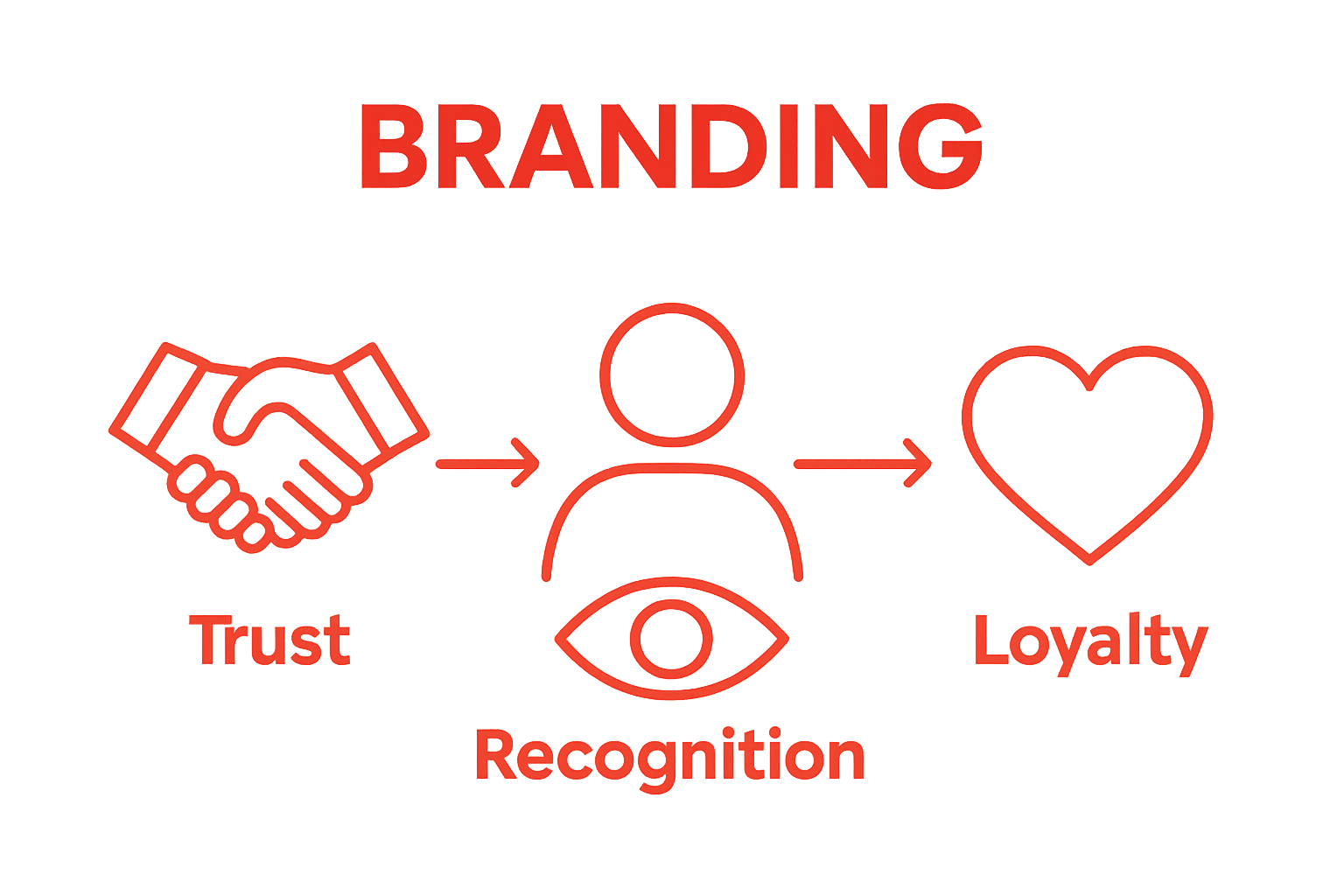
ng can convert casual consumers into loyal advocates.
A robust brand strategy delivers tangible economic benefits for small businesses. Effective branding enables companies to:
Strategic branding turns your business from a commodity into a preferred choice. When customers connect with your brand’s story and values, they are more likely to choose you repeatedly, even when alternatives exist.
Small businesses that invest in developing a consistent, authentic brand narrative can compete effectively against larger competitors. Your brand becomes a powerful communication tool that speaks volumes about your business’s character, mission, and unique value proposition. It transcends traditional marketing, creating an emotional connection that transforms transactions into meaningful relationships.
Brand development is a strategic process that transforms a business from an anonymous entity into a recognizable, trusted organization. Unlike random marketing efforts, brand development follows a systematic approach that carefully constructs a cohesive identity and narrative.
Branding operates on deep psychological principles of human perception and emotional connection. When businesses understand how consumers form mental associations, they can intentionally design brand experiences that resonate at a subconscious level. Your brand becomes a complex emotional shorthand that communicates your entire business philosophy in milliseconds.
According to Journal of Consumer Psychology, successful brands create neurological connections that trigger immediate recognition and positive emotional responses. This means your branding is not just about visual design but about creating a comprehensive sensory and emotional experience.
Effective brand development involves strategically integrating multiple elements:
Each interaction becomes an opportunity to reinforce your brand’s core narrative. Learn more about strategic brand positioning, which helps small businesses craft compelling market identities.
Small businesses can leverage brand mechanics by understanding that every customer interaction is a chance to tell their unique story. From website design to customer service interactions, each touchpoint should authentically reflect the brand’s core values and personality. The goal is creating a memorable, consistent experience that distinguishes your business in a crowded marketplace.
Branding is a complex ecosystem of interconnected elements that collectively create a business’s unique identity. Understanding these foundational components allows small businesses to craft a compelling and coherent brand strategy that resonates with their target audience.
A brand is more than a logo or visual design. It represents a comprehensive system of interconnected elements that communicate your business’s essence. Each brand element serves as a critical touchpoint for customer perception and emotional connection.
According to West Virginia University, successful brand development requires strategic integration of multiple foundational elements.
Small businesses can develop robust brand identities by focusing on key strategic components:
These elements work synergistically to create a memorable and authentic brand narrative. Explore our strategic brand development services to understand how these components interconnect.
Successful branding requires consistent application across all customer touchpoints. From your website design to social media presence, every interaction should authentically reflect your brand’s core identity. By thoughtfully crafting and maintaining these brand elements, small businesses can create powerful, differentiated market positions that attract and retain loyal customers.
Exceptional branding transforms small businesses from local enterprises into memorable, sought-after brands. By understanding how successful companies leverage strategic branding, entrepreneurs can learn powerful techniques for creating distinctive market identities.
Small businesses that master branding do more than sell products - they craft compelling narratives that connect emotionally with customers. These brands understand that perception is more important than pure functionality.
According to the Small Business Administration, remarkable branding can propel businesses from local obscurity to global recognition. The KissTixx lip balm company exemplifies this principle, creating a unique brand by developing complementary flavors that combine during a kiss, which generated worldwide interest and expanded their market across 30 countries.
Successful small business branding often involves several critical strategies:
Your brand becomes your most powerful marketing asset, communicating your business’s essence even when you are not directly engaging customers. Discover our strategic brand development approach to transform your business narrative.
Effective branding is not about having the biggest budget but about strategic creativity. Small businesses can compete with larger competitors by crafting genuine, memorable brand experiences that resonate with their specific audience. The most successful brands do not just sell products - they create meaningful connections that turn customers into passionate advocates.
You just discovered how authentic branding sets your business apart and drives loyalty. But putting strong branding into action in the digital world and across complex marketplaces like Amazon and Walmart is where many business owners get stuck. Does your brand message feel lost in the crowd? Are you unsure how to make your business stand out and create real emotional connections with customers at every touchpoint?

Explore how RedDog Group’s expert consulting will help you build a consistent and effective brand presence both online and offline. See how our proven strategies for small business growth turn branding insight into measurable results. Businesses that act now not only increase their visibility but also gain a competitive edge in today’s crowded marketplace. Visit RedDog Group to get started and let’s elevate your brand together.
Branding helps small businesses establish a unique identity, build customer trust, and communicate their values and value proposition effectively.
Strong branding creates an emotional connection with customers, making them more likely to return and prefer your business over competitors, ultimately increasing customer loyalty.
Essential components include brand purpose, visual identity, brand voice, brand values, and emotional positioning, all of which work together to create a cohesive brand narrative.
The table below summarizes the key components of a successful brand and their roles in shaping a business’s identity.
| Brand Component | Description |
|---|---|
| Brand Purpose | The core mission and motivation for your business |
| Visual Identity | Logos, color schemes, and overall visual design language |
| Brand Voice | The communication style and consistent tone you use |
| Brand Values | The fundamental principles guiding a business’s behavior |
| Emotional Positioning | The feelings and perceptions you want customers to have |
Emotional connections lead to stronger customer relationships and can transform casual buyers into loyal advocates, enhancing brand recognition and preference in the marketplace.
Leave a comment: