
Published: March 2020 | Last Updated:December 2025
© Copyright 2026, Reddog Consulting Group.

Over 80 percent of American shoppers expect a seamless experience at every stage of their buying journey. In today’s crowded retail landscape, meeting these expectations means more than just making a sale. Lifecycle marketing offers retailers a smarter way to engage customers, anticipate their needs, and build lasting loyalty. Discover how understanding each stage of the customer lifecycle can transform scattered interactions into long-term relationships that drive real growth.
| Point | Details |
|---|---|
| Lifecycle Marketing Importance | Lifecycle marketing optimizes customer interactions throughout their purchasing journey, enhancing engagement and driving sustainable growth. |
| Customer Journey Stages | Understanding the stages of acquisition, conversion, retention, and loyalty is critical for developing effective marketing strategies that nurture customer relationships. |
| Omnichannel Strategy | A cohesive omnichannel approach, integrating physical and digital channels, improves customer experiences and meets evolving expectations throughout the lifecycle. |
| Avoiding Common Mistakes | Retailers should recognize unique customer segments and invest in data analytics to avoid generic marketing strategies that fail to resonate with customers. |
Lifecycle marketing represents a strategic approach that tracks and optimizes customer interactions across different stages of their purchasing journey, transforming traditional retail marketing into a dynamic, personalized experience. By understanding how customers evolve from initial awareness to loyal advocacy, retailers can create targeted strategies that enhance engagement and drive sustainable growth.
The core principle of lifecycle marketing lies in recognizing that each customer progresses through distinct phases characterized by unique behaviors and needs. Channel integration strategies become critical in this approach, allowing retailers to deliver consistent messaging and experiences across multiple touchpoints. Research indicates that effective channel integration significantly influences cognitive and emotional customer experiences, making seamless communication paramount for successful retail engagement.
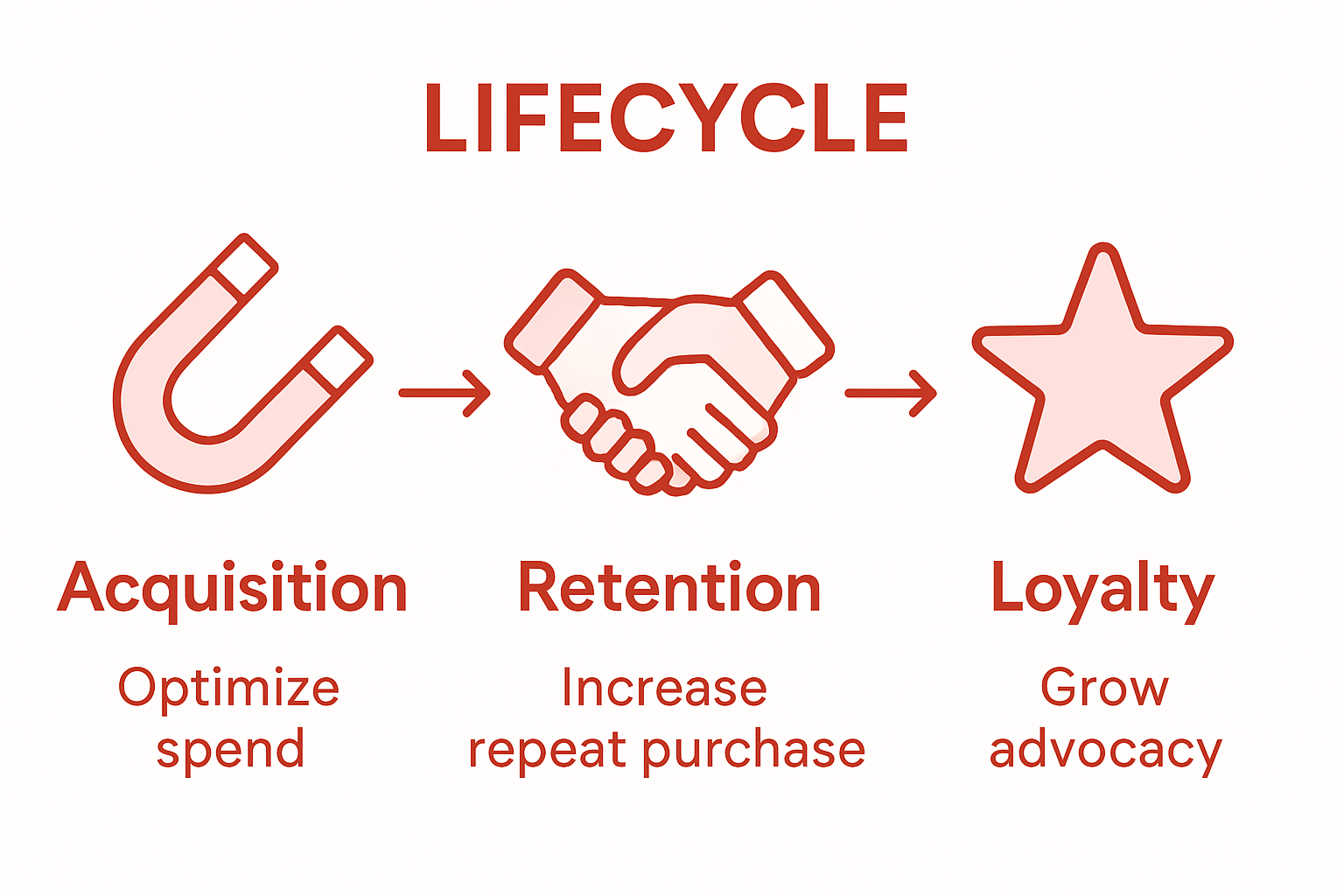
Understanding the customer lifecycle involves segmenting interactions into key stages: acquisition, conversion, retention, and loyalty. Retailers can leverage data-driven insights to predict customer behaviors and proactively address potential churn. Advanced predictive models, such as deep learning frameworks, enable businesses to anticipate customer needs and develop personalized marketing interventions that maximize lifetime value. By treating each stage as a unique opportunity for meaningful connection, retailers transform transactional relationships into long-term brand partnerships.
Successful lifecycle marketing requires a holistic approach that integrates data analytics, customer experience design, and strategic communication. Retailers must continuously adapt their strategies, using real-time insights to create responsive, individualized marketing experiences that resonate with customers at every stage of their journey. The ultimate goal is not just making a sale, but building lasting relationships that drive sustainable business growth.
The customer lifecycle journey represents a strategic framework that maps the progression of customer interactions from initial contact through long-term engagement. Retailers must understand each distinct stage to develop targeted marketing approaches that effectively nurture customer relationships and drive sustainable business growth.
Traditionally, the customer lifecycle comprises four primary stages: Acquisition, Conversion, Retention, and Loyalty. Advanced survival analytics demonstrate how predictive models can help businesses anticipate and mitigate customer churn at each critical transition point. In the acquisition stage, potential customers become aware of a brand through marketing channels, while conversion transforms initial interest into actual purchases.
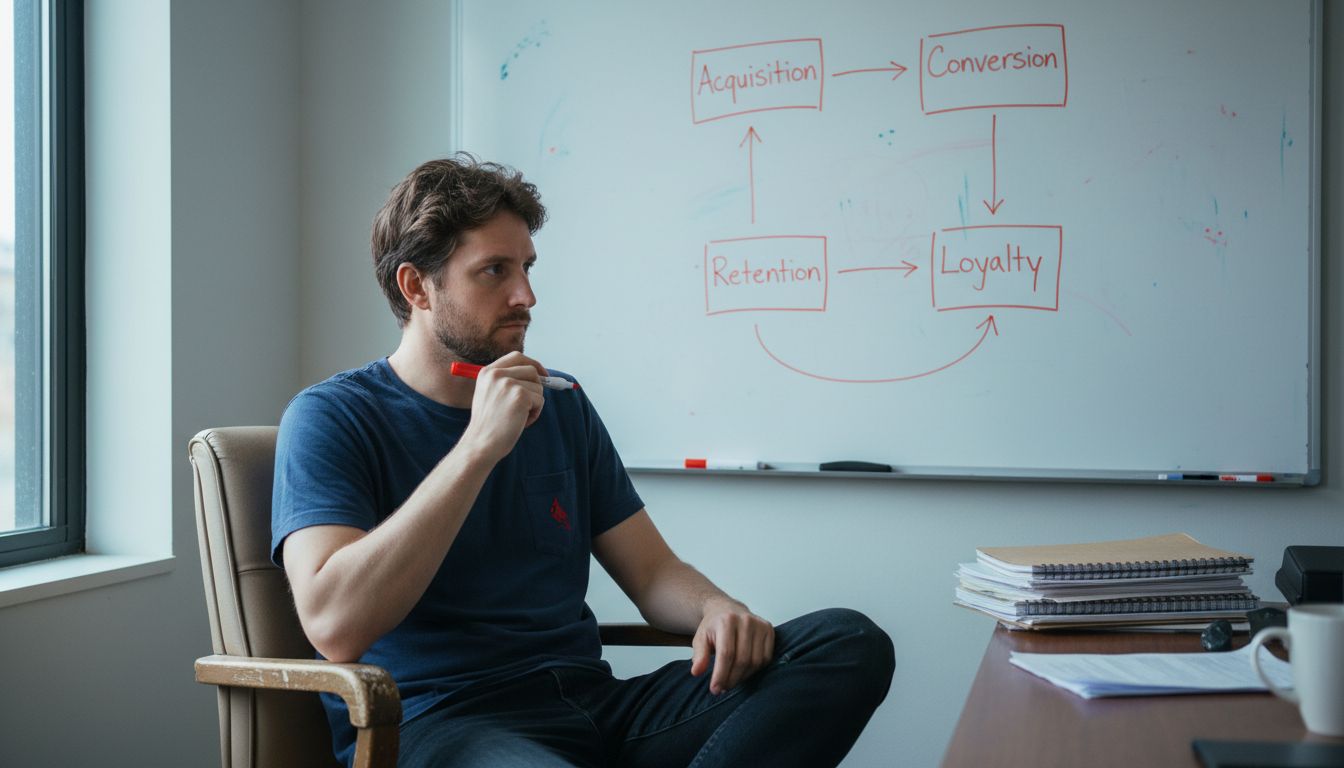
The retention stage becomes crucial for sustaining customer relationships. Causal machine learning techniques reveal that strategic marketing interventions like targeted coupon campaigns can significantly influence customer behavior during this phase. Retailers can leverage data-driven insights to create personalized experiences that encourage repeat purchases and strengthen emotional connections. Customer lifetime value strategies become instrumental in understanding how to maximize engagement across these different stages.
Ultimately, the loyalty stage represents the pinnacle of customer relationship management, where satisfied customers transform into brand advocates. Successful businesses recognize that each lifecycle stage requires unique engagement strategies, sophisticated data analysis, and a commitment to understanding evolving customer preferences. By treating the customer journey as a dynamic, interconnected process, retailers can create meaningful interactions that drive long-term growth and sustainable business success.
Omnichannel strategies represent a sophisticated approach to creating seamless customer experiences across multiple interaction points, transforming how retailers engage with their audience throughout the customer lifecycle. By integrating physical and digital channels, businesses can develop more responsive and personalized marketing approaches that meet evolving customer expectations.
Channel integration techniques have become increasingly critical in modern retail environments. Comprehensive research on channel integration demonstrates how cohesive strategies significantly impact customer experiences across different touchpoints. Retailers must develop comprehensive approaches that allow customers to seamlessly transition between online platforms, mobile applications, physical stores, and customer service channels.
Advanced omnichannel research reveals the importance of creating flexible customer interaction models, particularly through innovative options like trial and return mechanisms. These strategies help businesses understand and anticipate customer behaviors, enabling more personalized engagement throughout the customer lifecycle. Successful omnichannel approaches require sophisticated data integration, allowing retailers to track and respond to customer preferences in real time.
Ultimately, effective omnichannel strategies demand a holistic view of customer interactions. Retailers must invest in technological infrastructure, data analytics, and customer experience design that transcends traditional channel boundaries. By creating a unified, responsive ecosystem that adapts to individual customer needs, businesses can transform transactional relationships into long-term, meaningful connections that drive sustainable growth and customer loyalty.
Small and medium retailers face unique challenges in today’s competitive marketplace, making strategic lifecycle marketing approaches critical for sustainable growth. By adopting sophisticated marketing techniques, these businesses can level the playing field with larger competitors and create more meaningful customer connections.
Advanced marketing intervention strategies demonstrate how causal machine learning can help smaller retailers optimize their marketing approaches. Targeted coupon campaigns enable businesses to create precise, data-driven interventions that maximize customer engagement and conversion rates. These sophisticated techniques allow smaller retailers to develop personalized marketing strategies that were previously accessible only to larger enterprises.
Innovative omnichannel research reveals additional opportunities for small and medium retailers through flexible customer interaction models. Trial and return mechanisms, for instance, can significantly enhance customer trust and satisfaction. Retail expansion strategies become more effective when retailers can create seamless experiences that adapt to individual customer preferences.
Ultimately, lifecycle marketing empowers small and medium retailers to compete more effectively by transforming data into actionable insights. By investing in sophisticated yet accessible marketing technologies, these businesses can create personalized customer experiences, optimize their marketing spend, and build lasting relationships that drive sustainable growth. The key lies in understanding that technology and strategic thinking can help smaller retailers punch well above their weight in an increasingly complex marketplace.
Lifecycle marketing demands precision and strategic thinking, yet many retailers fall into predictable traps that can undermine their customer engagement efforts. Understanding these common pitfalls is crucial for developing more effective, data-driven marketing approaches that truly resonate with customers.
Causal machine learning research reveals several critical mistakes that can derail lifecycle marketing strategies. One fundamental error is treating all customers as a homogeneous group, rather than recognizing the unique characteristics of different customer segments. Retailers often fail to develop nuanced, personalized marketing interventions that address specific customer needs and behaviors at each stage of the lifecycle.
Advanced marketing analytics highlight additional common mistakes, such as inconsistent data tracking and poor channel integration. Growth marketing strategies become ineffective when businesses lack a comprehensive understanding of customer interactions across different touchpoints. Many retailers struggle with siloed data systems that prevent a holistic view of the customer journey, leading to fragmented and ineffective marketing approaches.
Ultimately, avoiding these lifecycle marketing mistakes requires a commitment to continuous learning and adaptability. Successful retailers invest in sophisticated data analysis, develop flexible marketing strategies, and maintain a laser focus on understanding individual customer preferences. By recognizing and addressing these common pitfalls, businesses can transform their lifecycle marketing approach from a generic, one-size-fits-all model to a precision-driven strategy that delivers meaningful, personalized experiences.
Lifecycle marketing is all about delivering personalized and seamless experiences that guide customers from acquisition to loyalty. The challenge many retailers face is turning this strategic framework into actionable growth that connects online and offline channels effectively. Pain points like inconsistent data tracking, poor channel integration, and generic marketing approaches can stall your progress. Concepts like targeted coupon campaigns, causal machine learning, and predictive analytics from the article highlight how sophisticated strategies drive meaningful customer engagement and long-term brand loyalty.
At Reddog Group, we specialize in helping small and medium retailers overcome these exact hurdles. Our expert consulting on omnichannel retailing, marketplace management, and integrated sales strategies transforms complex lifecycle marketing into measurable revenue growth. With proven success managing over 50 brands and 30,000 SKUs, we deliver tailored solutions in marketing campaigns, product listing optimization, and inventory management to elevate your brand’s market reach.
Ready to turn lifecycle marketing insights into your competitive advantage?
Explore how our expertise in omnichannel mastery and ecommerce can empower your business today. Visit Reddog Group to discover customized strategies poised to maximize your customer lifetime value and accelerate sustainable growth. Don’t let common marketing pitfalls hold you back. Take the next step now and partner with a results-driven team committed to your success.
Lifecycle marketing in retail is a strategic approach that tracks and optimizes customer interactions throughout the purchasing journey, from awareness to loyalty. It aims to create personalized experiences that enhance customer engagement and drive sustainable growth.
The customer lifecycle comprises four primary stages: Acquisition, Conversion, Retention, and Loyalty. Each stage requires different marketing strategies to effectively nurture customer relationships and encourage long-term engagement.
Omnichannel strategies create seamless experiences across multiple interaction points, allowing customers to transition effortlessly between online and offline channels. This integration helps retailers personalize their marketing efforts and meet evolving customer expectations throughout the lifecycle.
Common mistakes include treating all customers as a homogeneous group, poor channel integration, and inconsistent data tracking. These pitfalls can lead to ineffective marketing efforts, making it crucial for retailers to focus on tailored strategies and maintain a comprehensive view of customer interactions.
Leave a comment: