
Published: March 2020 | Last Updated:November 2025
© Copyright 2026, Reddog Consulting Group.

Branding in ecommerce sounds simple, just a logo and some colors, right? Not even close. Studies show that consistent branding across all platforms can increase revenue by up to 23 percent. Most people think branding only matters for big companies with massive budgets. The real surprise is that online shops of any size can turn browsing strangers into loyal fans by mastering just a few key branding moves.
| Takeaway | Explanation |
|---|---|
| Branding creates a unique digital identity | Establish a brand identity that differentiates your ecommerce business in the crowded online market. |
| Consistency is key across digital touchpoints | Maintain uniform visual and messaging elements to enhance brand recognition and trust among consumers. |
| Emotional connections drive customer loyalty | Develop storytelling that resonates with your audience to transform one-time buyers into repeat customers. |
| Strong branding increases perceived value | Effective branding allows you to justify higher prices and improve overall business profitability. |
| Strategic communication fosters trust | Authentic messaging helps to build credibility and long-term customer relationships, essential for ecommerce success. |
Branding in ecommerce represents the comprehensive strategy of creating a unique digital identity that distinguishes an online business from its competitors. Unlike traditional retail, ecommerce branding occurs entirely through digital channels, requiring businesses to craft a compelling narrative and visual experience that resonates with consumers in a crowded online marketplace.
In ecommerce, branding transcends mere logos and color schemes. It encompasses the entire customer experience, from website design to product presentation, customer service interactions, and digital communication. Your brand becomes the digital personality that connects emotionally with customers, telling a story that goes beyond transactional relationships.
Successful ecommerce branding involves creating a consistent and memorable experience across multiple digital touchpoints. This means ensuring that your messaging, visual design, customer communication, and product presentation align seamlessly to communicate a cohesive brand narrative. Learn more about building a strong digital brand presence that captures customer attention and loyalty.
Effective ecommerce branding requires strategic implementation of several critical components:
By understanding and executing these elements, online businesses can transform their digital presence from anonymous marketplaces to memorable, engaging brand experiences that drive customer connection and long-term loyalty.
Below is a table summarizing the key elements of ecommerce branding, providing a quick reference to the core features discussed in this section.
| Branding Element | Description |
|---|---|
| Visual Consistency | Recognizable color palette, typography, and design language |
| Storytelling | Compelling narrative that explains your brand’s mission and values |
| Customer Experience | Intuitive interfaces and personalized interactions |
| Product Presentation | High-quality visuals and descriptions that reflect brand identity |
In the hyper-competitive digital marketplace, branding serves as the critical differentiator that enables online retailers to stand out, attract customers, and build sustainable business growth. A powerful brand does more than simply sell products it creates a memorable identity that resonates emotionally with consumers and establishes long-term market credibility.
Customers are significantly more likely to purchase from brands they recognize and trust. For online retailers, where physical interaction is absent, branding becomes the primary mechanism for establishing credibility. Strong branding communicates professionalism, reliability, and commitment to quality, which are essential in converting casual browsers into loyal customers. Explore strategic approaches to digital retail positioning that can transform your online presence.
With countless online retailers competing for consumer attention, a distinctive brand helps businesses cut through the noise. Effective branding creates a unique narrative that goes beyond product specifications, highlighting what makes your business special. This could involve emphasizing ethical sourcing, innovative design, exceptional customer service, or a compelling founder story that connects with your target audience.
Key advantages of strategic online retail branding include:
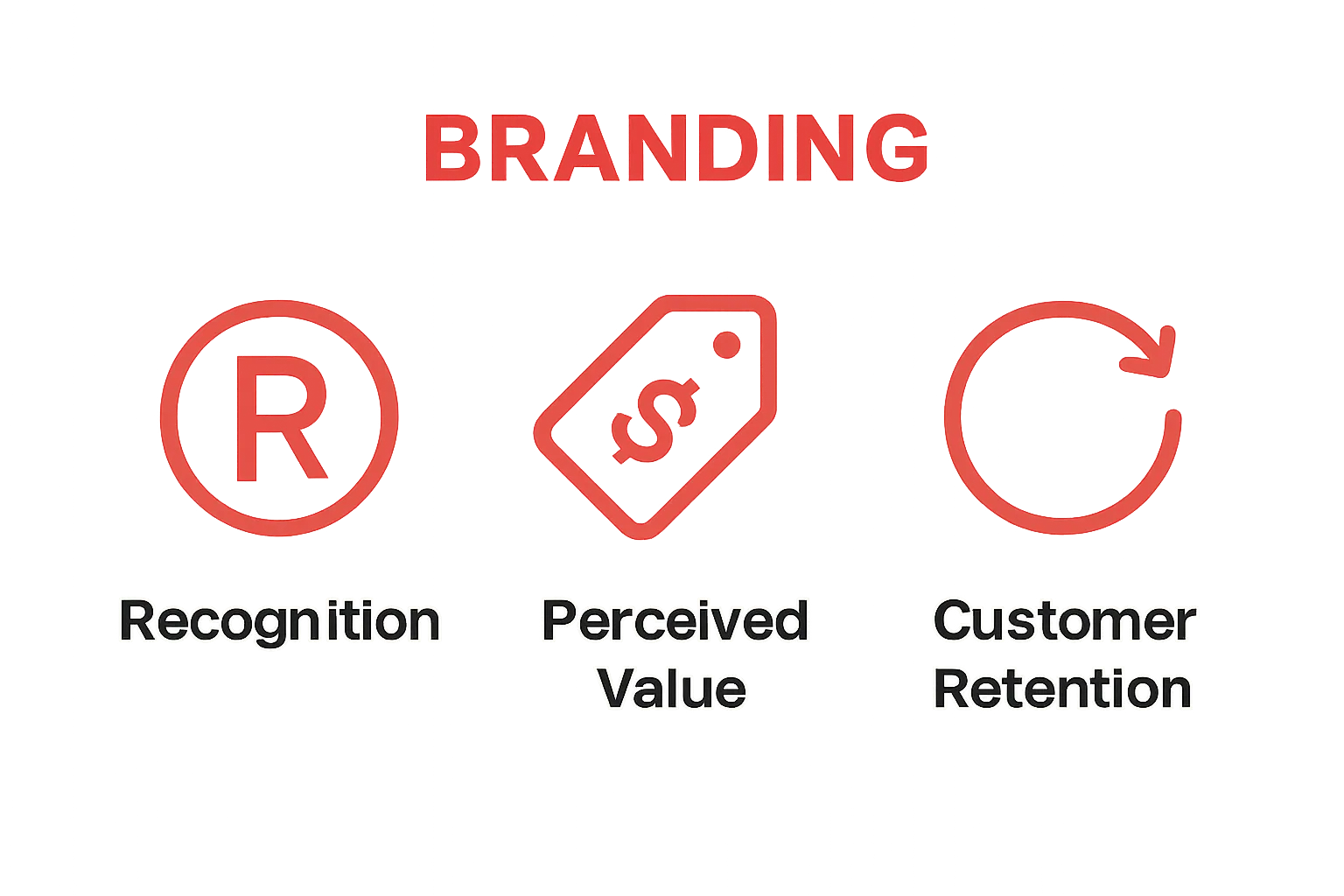
By investing in comprehensive branding strategies, online retailers transform from generic sellers to memorable, trusted brands that customers actively seek out and recommend.
Branding operates as a powerful psychological mechanism that fundamentally shapes consumer perceptions, decision making, and emotional connections with online retailers. By strategically crafting brand experiences, businesses can significantly influence how customers perceive value, make purchasing decisions, and develop long-term loyalty.
Consumer behavior is deeply rooted in emotional and subconscious responses triggered by brand interactions. When customers encounter a well-designed brand, they instantaneously form complex mental associations that go far beyond product features. These psychological triggers include feelings of trust, aspirational identity, and perceived social status. Research on consumer psychology demonstrates that brands which successfully activate emotional pathways can dramatically increase customer engagement and purchase intent.
Modern consumers do not simply buy products they invest in narratives and experiences. Effective brand storytelling transforms transactional interactions into meaningful connections. By communicating a compelling brand mission, values, and unique perspective, online retailers can influence consumers to choose their products over competitors. This narrative approach taps into fundamental human desires for connection, authenticity, and personal meaning.
Key psychological mechanisms through which branding influences consumer behavior include:
By understanding these intricate psychological dynamics, online retailers can develop nuanced branding strategies that transform casual interactions into profound customer relationships.
This table outlines key psychological mechanisms through which ecommerce branding influences consumer behavior, helping you quickly compare their effects.
| Psychological Mechanism | Effect on Consumer Behavior |
|---|---|
| Social Validation | Aligns brand with the customer’s desired self-image |
| Emotional Resonance | Evokes positive feelings, increasing purchase motivation |
| Cognitive Ease | Simplifies decision making with brand recognition |
| Perceived Quality | Raises perceived value of products through strong branding |

Effective ecommerce branding transcends basic visual design, requiring a holistic approach that integrates multiple strategic components to create a compelling digital presence. Successful online brands develop a comprehensive ecosystem that communicates value, builds trust, and creates meaningful connections with their target audience.
Brand consistency is the cornerstone of successful digital identity. This involves developing a unified visual language that remains coherent across all digital touchpoints, from website design to social media profiles and email communications. Every visual element should reflect a carefully curated brand personality that speaks directly to your target market. Explore strategic approaches to building a robust digital brand presence that ensures seamless customer experiences.
Beyond aesthetics, effective ecommerce branding requires nuanced communication strategies that articulate your brand’s unique value proposition. This means crafting messaging that goes beyond product descriptions, telling a story that resonates with your audience’s aspirations, challenges, and core values. Authentic communication builds emotional connections that transform transactional relationships into long-term brand loyalty.
Critical elements for developing a robust ecommerce branding strategy include:
By meticulously integrating these elements, online retailers can create a powerful brand ecosystem that distinguishes them in an increasingly competitive digital marketplace.
Establishing a unique brand identity online can feel overwhelming, especially with fierce competition and ever-changing customer expectations. As highlighted in this article, mastering ecommerce branding means much more than a distinct logo. It requires a consistent message, powerful storytelling, and a seamless experience that earns lasting loyalty. If building trust, differentiation, and emotional resonance in an overcrowded market is your challenge, you are not alone.
Digital & Business Consulting Services by Reddog Consulting can help translate your brand vision into measurable growth. Our team specializes in omnichannel strategies, marketplace management, and digital brand development for small and medium-sized businesses focused on online retail. See firsthand how strong branding drives higher recognition, premium value, and lasting customer relationships.
Ready to stand out among digital competitors and convert browsers into loyal buyers? Visit Reddog Group to discover how our tailored solutions can unlock your full ecommerce potential. Take the first step now and explore our comprehensive services for long-term brand success.
Branding in ecommerce creates a unique digital identity that distinguishes an online business from competitors, helping to establish customer trust and emotional connections.
Effective branding influences consumer behavior by triggering emotional responses, shaping perceptions of value, and transforming transactional interactions into meaningful connections through storytelling.
Key elements of effective ecommerce branding include visual consistency, authentic storytelling, strategic brand communication, and a focus on enhancing customer experience across all touchpoints.
Brand consistency is crucial in ecommerce as it builds recognition and trust. A unified visual and messaging approach ensures that customers instantly identify and connect with your brand across various platforms.
Leave a comment: