
Published: March 2020 | Last Updated:March 2026
© Copyright 2026, Reddog Consulting Group.

The global cross-border ecommerce market is exploding from $562 billion in 2018 to over $4 trillion by 2027. Yet many CPG brand operators still view international selling as a simple checkbox rather than a complex operational shift. This guide unpacks the regulatory, financial, and logistical realities of cross-border ecommerce so you can expand profitably without hidden margin leaks or compliance disasters.
| Point | Details |
|---|---|
| Cross-border ecommerce is a high-growth B2C/B2B model selling products internationally online, driven by technology and free trade. | Projected to reach $4 trillion by 2027, offering major opportunities for U.S. CPG brands seeking scalable revenue. |
| Regulatory compliance and customs management are critical to avoid shipment delays and cost overruns. | Incomplete documentation can stall customs clearance beyond 24-48 hours, hurting delivery speed and customer trust. |
| Marketplace fees, duties, and logistics compress margins significantly if not actively monitored. | Amazon FBA and Walmart WFS international fees require detailed tracking to identify and plug profit leakage. |
| Cultural localization and market-specific payment methods drive higher conversion rates and customer trust. | Adapting language, currency, and customer service to local markets is essential for competitive entry. |
| A margin-first strategic framework balances compliance, logistics, and channel economics for sustainable growth. | Structured planning around measurable profit contribution per channel prevents costly expansion mistakes. |
Cross-border ecommerce involves selling products online across different countries to a global consumer base. This includes B2C transactions where brands sell directly to international consumers, B2B sales to foreign businesses, and C2C peer transactions on platforms like eBay. It differs fundamentally from domestic ecommerce, which operates within a single country’s regulatory and logistical framework. Unlike traditional international trade relying on distributors and brick-and-mortar retail, cross-border ecommerce enables direct digital access to foreign markets with faster entry timelines.
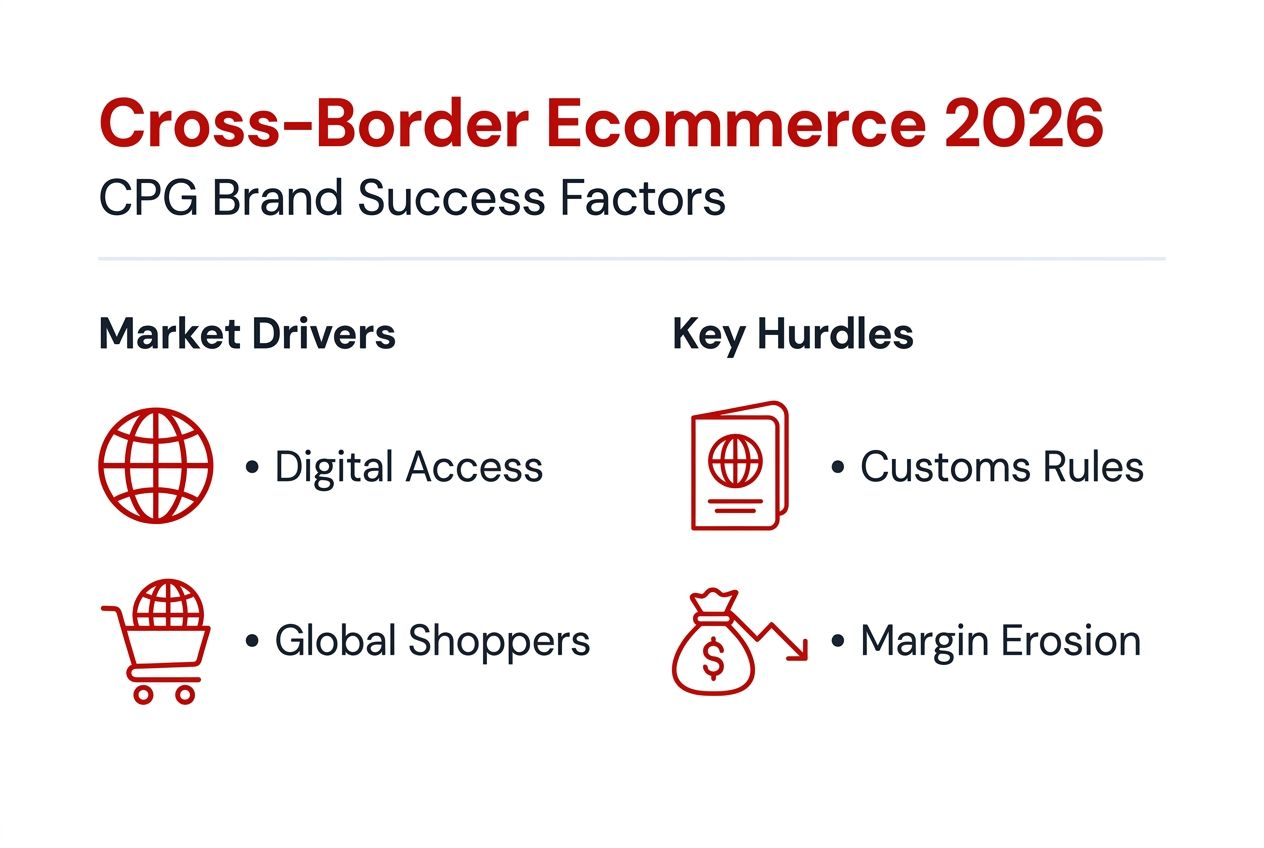
The market trajectory is staggering. From $562 billion in 2018, the cross-border ecommerce market is projected to exceed $4 trillion by 2027. Key drivers include:
For ambitious U.S. CPG brands in the $500K to $20M revenue range, this growth represents a massive opportunity. However, success depends on understanding the operational complexity beneath the surface. Cross-border ecommerce global growth requires more than translating product listings. It demands strategic clarity around margins, compliance, and channel economics.
Pro Tip: Before expanding internationally, audit your domestic contribution margins by channel. If you don’t understand what each U.S. marketplace actually contributes to profit, adding international complexity will magnify hidden losses. Start with increasing ecommerce sales for CPG brands domestically, then scale globally with a profitable ecommerce tech stack that supports cross-border operations.
Customs clearance is the gatekeeper of cross-border fulfillment speed. International shipments typically take 24 to 48 hours to clear customs when documentation is complete and compliant. Delays beyond this window damage delivery timelines, increase storage costs, and erode customer trust. For CPG brands shipping perishable or time-sensitive products, even a 48-hour delay can render inventory unsellable.
Key documentation requirements include:
Incomplete or inaccurate documentation triggers automatic customs holds. Customs officers cannot release shipments without verified HS codes, proper valuation, or missing permits. This results in storage fees, expedited processing charges, and potential product seizure for non-compliant goods.
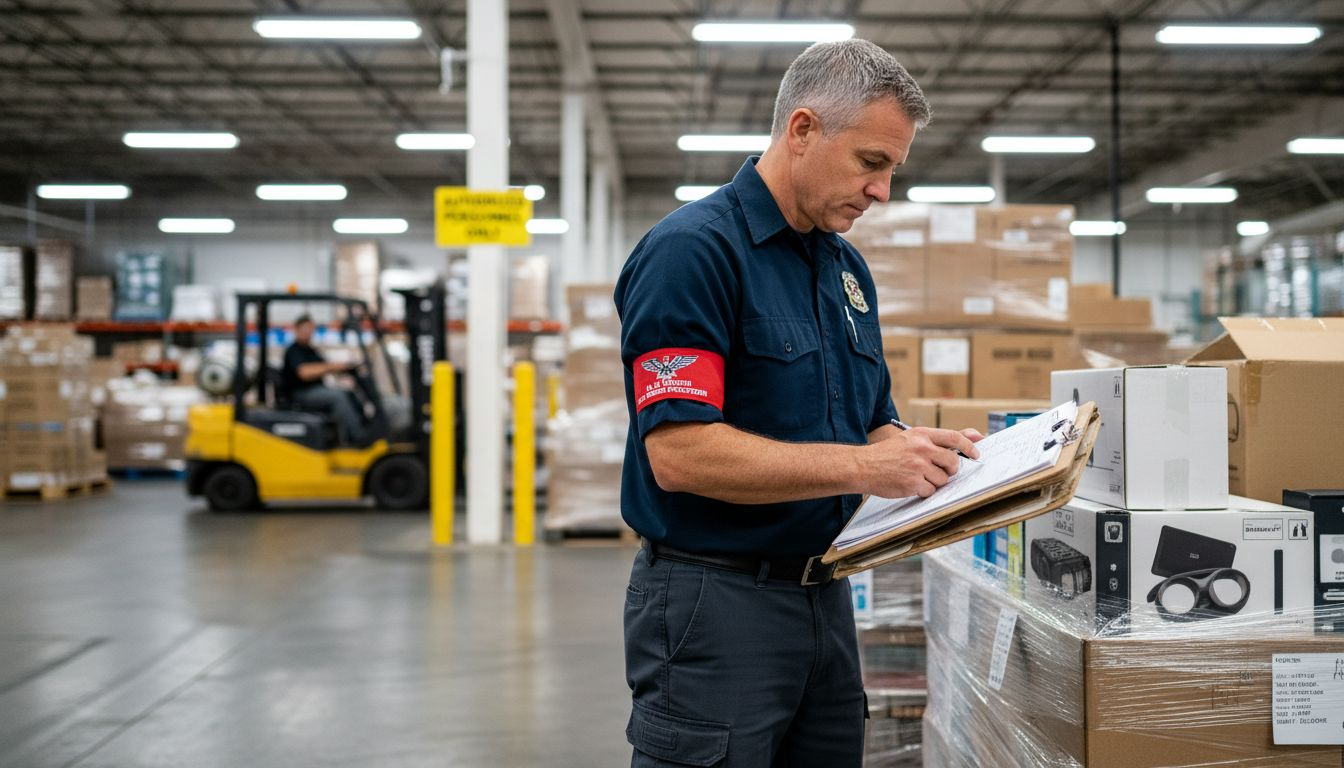
Customs administrations worldwide emphasize efficient processing of high volumes of small parcels as ecommerce grows. However, high parcel volumes strain inspection capacity, increasing scrutiny on incomplete filings. For CPG brands shipping hundreds of small orders weekly, even a 5% documentation error rate means dozens of delayed shipments and frustrated customers.
Compliance checklist for cross-border expansion:
Pro Tip: Partner with a logistics provider experienced in your product category and target markets. Generic 3PLs often lack expertise in food-grade customs requirements or supplement import restrictions, leading to avoidable compliance failures.
Marketplace fees, fulfillment costs, customs duties, and international shipping compress margins faster than most CPG operators anticipate. More than half of online retailers surveyed in 2023 reported shipping products internationally, yet many failed to account for the full cost stack impacting profitability. Understanding fee structures is critical to maintaining positive contribution margins.
Amazon FBA and Walmart WFS offer international fulfillment services that simplify logistics but layer additional fees onto base marketplace commissions. Typical cost components include:
| Fee Component | Amazon FBA International | Walmart WFS International | Margin Impact |
|---|---|---|---|
| Referral Fee | 8-15% | 6-15% | High |
| Fulfillment Fee | $3-$8/unit | $3-$7/unit | High |
| International Shipping | $8-$15/unit | $6-$12/unit | Very High |
| Storage (monthly) | $0.75-$2.40/cu ft | $0.60-$2.00/cu ft | Medium |
| Customs Duties | 0-25% landed cost | 0-25% landed cost | Very High |
| Currency Conversion | 2-4% | 2-3% | Low |
For a $25 retail price CPG product, total marketplace and logistics costs can easily consume $12 to $18, leaving razor-thin margins before accounting for COGS and marketing. Without granular cost tracking, brands often discover negative contribution margins only after scaling volume.
Strategies to detect and mitigate margin leakage:
Pro Tip: Calculate your true landed cost per unit including all fees, duties, and logistics before setting international pricing. Many CPG brands price based on domestic costs plus a markup, then discover international fees eliminate profit entirely. Understanding the role of cross border ecommerce economics prevents costly scaling mistakes. Apply the same rigor you use for scaling ecommerce business strategies domestically to international expansion.
Successful cross-border entry requires more than shipping products abroad. Businesses expanding cross-border must plan according to market demand, legal frameworks, cultural compatibility, and currency management. Skipping thorough market research leads to inventory stuck in unsellable markets or non-compliant product launches triggering regulatory penalties.
Market research priorities include:
Currency exchange risk directly impacts profitability. A 10% currency swing can eliminate margins on international sales if pricing isn’t dynamically adjusted. Hedging strategies, multi-currency pricing, or partnering with payment processors offering favorable exchange rates protect against volatility.
Localization extends beyond translation. Payment method preferences vary dramatically by market. Credit cards dominate U.S. transactions, but many European markets prefer bank transfers, while Asian consumers expect digital wallets like Alipay or WeChat Pay. Offering locally preferred payment options can increase conversion rates by 30% to 50%.
Customer service localization builds trust and reduces return rates. Providing support in local languages, understanding regional return expectations, and adjusting response times to local norms improve customer satisfaction and repeat purchase rates. Brands treating international customers identically to U.S. buyers often face higher return rates and negative reviews due to unmet cultural expectations.
Practical entry considerations:
Pro Tip: Test new markets with small inventory commitments through marketplace programs before investing in dedicated distribution infrastructure. This validates demand and profitability without over-committing capital. Use the insights from ecommerce growth workflow multichannel success to structure phased international expansion.
Many businesses misunderstand cross-border ecommerce as an easy extension of domestic sales, underestimating complexity around customs, taxation, and fulfillment. This misconception leads to cash flow surprises, compliance violations, and damaged brand reputation when reality diverges from expectations.
Myth: Cross-border ecommerce is just domestic sales with international shipping. Reality: Each target market has unique regulatory requirements, tax obligations, and import restrictions. Treating international expansion as a simple logistics add-on ignores legal, financial, and operational complexities that can halt sales or trigger penalties.
Myth: Marketplaces handle all compliance automatically. Reality: While platforms like Amazon and Walmart simplify logistics, sellers remain legally responsible for product compliance, accurate customs declarations, and tax remittance. Marketplace account suspensions frequently result from seller compliance failures, not platform errors.
Myth: International customers have identical expectations to U.S. buyers. Reality: Delivery speed expectations, return policies, customer service norms, and communication preferences vary significantly by region. Applying U.S. standards globally creates friction and negative reviews.
Common operational challenges include:
Underestimating these challenges leads to undercapitalized expansions where brands run out of working capital before achieving profitable scale. For CPG brands operating on tight margins, even small operational missteps compound quickly across hundreds of international orders.
A margin-first approach to international expansion prioritizes sustainable profitability over vanity metrics like total revenue or market presence. Businesses expanding cross-border must align logistics, 3PL strategies, and margin monitoring for sustainable growth. This framework rests on four pillars: market research and localization, compliance and customs, logistics and fulfillment, and marketplace economics and margins.
Stepwise implementation approach:
Set clear profitability goals: Define minimum contribution margin targets per international channel before launch. If a market can’t achieve target margins within 12 months, delay entry until economics improve.
Establish compliance infrastructure: Register as Importer of Record, obtain necessary tax IDs, verify product certifications, and document HS codes for all SKUs before first shipment.
Select channels strategically: Compare marketplace fee structures, fulfillment costs, and customer acquisition costs across platforms. Prioritize channels offering the best margin profile for your product category.
Optimize logistics and fulfillment: Evaluate direct shipping vs. regional warehouses vs. marketplace fulfillment. Model landed costs for each option and choose the configuration maximizing contribution margin while meeting delivery expectations.
Implement margin tracking systems: Build SKU-level P&L tracking capturing all fees, duties, shipping, storage, and currency conversion costs. Review weekly to identify margin leakage and adjust pricing or channel mix proactively.
Monitor and iterate: Track sell-through rates, return rates, customer acquisition costs, and lifetime value by market. Double down on profitable markets and exit or restructure underperforming regions.
The most successful CPG brands treat each international market as a distinct P&L center rather than aggregating all international sales into a single bucket. This granularity reveals which markets contribute positively to profit and which drain resources despite appearing successful on a revenue basis.
Aligning 3PL and order fulfillment to cross-border needs requires specialized capabilities. Generic domestic 3PLs often lack customs brokerage expertise, international carrier relationships, or multi-country warehouse networks. Partnering with logistics providers experienced in your target markets and product category reduces compliance risk and improves delivery speed.
Ongoing margin leakage monitoring focuses on:
Pro Tip: Use the same contribution margin discipline for international expansion that you apply domestically. If you can’t confidently calculate profit contribution per channel, you’re not ready to scale cross-border. Apply frameworks from scaling ecommerce business, ecommerce growth workflow multichannel success, and scale ecommerce omnichannel success to international operations.
Integrating ecommerce marketplaces with regional physical distribution and wholesale channels creates competitive advantages that pure-play online strategies can’t match. Regional distribution centers reduce shipping costs by 30% to 50% compared to direct international shipping while cutting delivery times from weeks to days. This improves customer satisfaction and repeat purchase rates significantly.
Wholesale channel integration with ecommerce marketplaces creates demand synergy. Physical retail presence builds brand awareness and trust, driving online marketplace sales. Conversely, marketplace visibility generates wholesale inquiries from retailers seeking trending products. CPG brands successfully executing this hybrid model often achieve 20% to 40% higher total margins than marketplace-only competitors.
Case examples of successful multi-channel U.S. CPG brands:
Hybrid models improve margins through:
Tactical steps for combining physical and online sales globally:
Pro Tip: Start with marketplace validation to prove demand, then layer in wholesale partnerships once you’ve demonstrated sell-through velocity. Wholesale buyers want evidence of demand, and marketplace sales data provides objective proof that reduces their risk.
Navigating cross-border ecommerce complexity requires specialized expertise in marketplace economics, logistics optimization, and margin management. Reddog Group partners with CPG brands in the $500K to $20M revenue range to build margin-first international expansion strategies that prioritize profitability over vanity metrics. Our frameworks help you understand true channel economics, identify hidden margin leaks, and structure scalable operations across Amazon, Walmart, DTC, wholesale, and distribution.
We bring analytical rigor to cross-border growth planning, ensuring you expand into markets that actually contribute to profit rather than just adding revenue complexity. Our approach combines marketplace performance optimization with physical retail strategy, bridging digital growth with wholesale and distribution execution. Whether you’re evaluating your first international market or optimizing existing cross-border operations, Reddog Group provides the operational clarity needed to scale profitably. Explore how omnichannel growth with Reddog Group can accelerate your international expansion while protecting margins.
Incomplete documentation causes the majority of customs delays and penalties. Missing or incorrect HS codes, inaccurate product valuations, and absent certificates of origin trigger automatic holds. For CPG brands, failing to obtain required import permits for food, supplements, or cosmetics can result in product seizure and destroyed inventory. Always verify documentation completeness and work with customs brokers experienced in your product category.
Implement SKU-level P&L tracking that captures all fees, duties, shipping, storage, and currency conversion costs per international channel. Review these margins weekly and adjust pricing, packaging, or channel mix proactively. Many brands discover 20% to 30% margin leakage simply by understanding true landed costs. Optimize packaging dimensions to reduce dimensional weight charges, and leverage free trade agreements to minimize duty rates where applicable.
Offer locally preferred payment methods, which can increase conversion rates by 30% to 50%. Translate product descriptions and customer service into local languages, and adjust imagery to reflect cultural preferences. Price in local currencies to eliminate conversion friction. Adapt return policies and delivery expectations to match regional norms. Brands that treat localization as a strategic priority consistently outperform competitors relying on direct translations alone.
Extremely important. Generic domestic 3PLs often lack customs brokerage expertise, international carrier relationships, and compliance knowledge for regulated products like food or supplements. Choosing a 3PL experienced in your target markets and product category reduces compliance risk, improves delivery speed, and lowers total logistics costs. Poor 3PL choice is a leading cause of cross-border expansion failures for CPG brands.
Possible but significantly harder. Marketplaces provide built-in customer traffic, fulfillment infrastructure, and payment processing that would cost hundreds of thousands to replicate independently. Pure DTC cross-border strategies require substantial marketing spend to acquire international customers and complex logistics to manage international fulfillment. Most successful CPG brands use marketplaces as the foundation, then layer in DTC and wholesale channels once demand is validated.
Leave a comment: